Most growth MCP servers are read-only, and the ones that write are the ones worth being careful with. This maps what an agent can actually do across ads, attribution, analytics, paywalls and lifecycle messaging.
A referral programme becomes a payment system the moment rewards have value. This guide shows founders how to model abuse, validate qualifying events, use device integrity safely, control reward release, investigate clusters and protect legitimate advocates.
The first 1,000 users require a bridge between hand-recruited learning and repeatable distribution. This guide gives founders a 12-week channel sequence, activation gates, weekly scorecard, ethical launch tactics and evidence-based transition to paid growth.
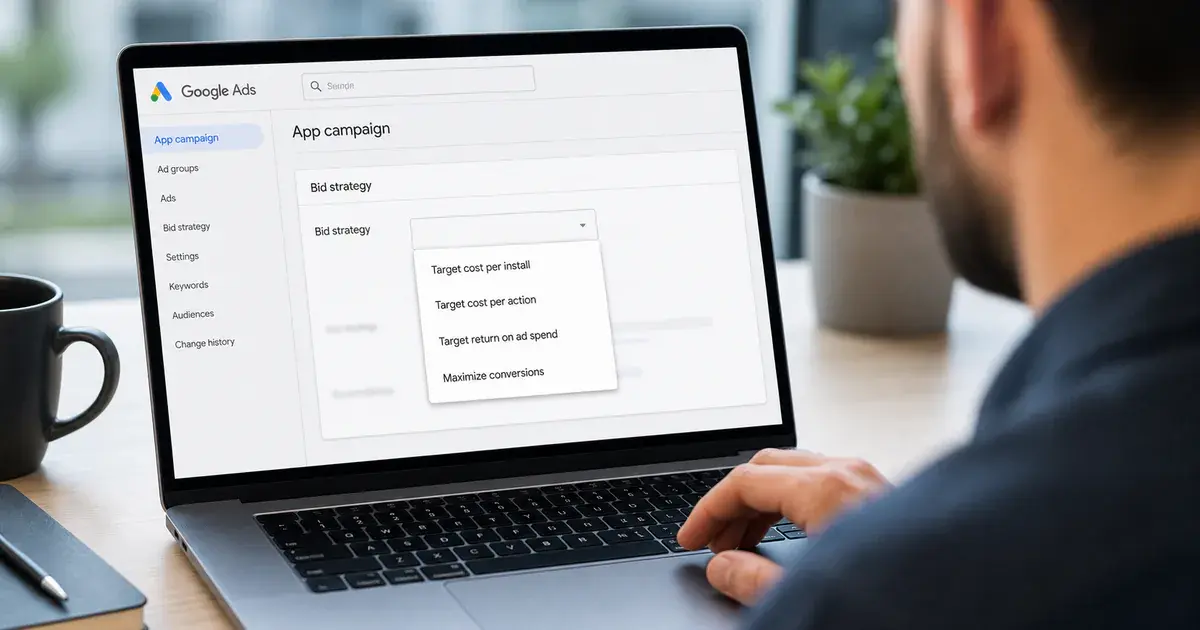
Most App campaign bid strategy arguments are really eligibility arguments. Google publishes a conversion-volume requirement for tROAS, a warning that small budgets on Maximize conversions may get no conversions at all, and an explicit caution against bidding on more than one in-app action. Read in order, those three rules decide the strategy for you.
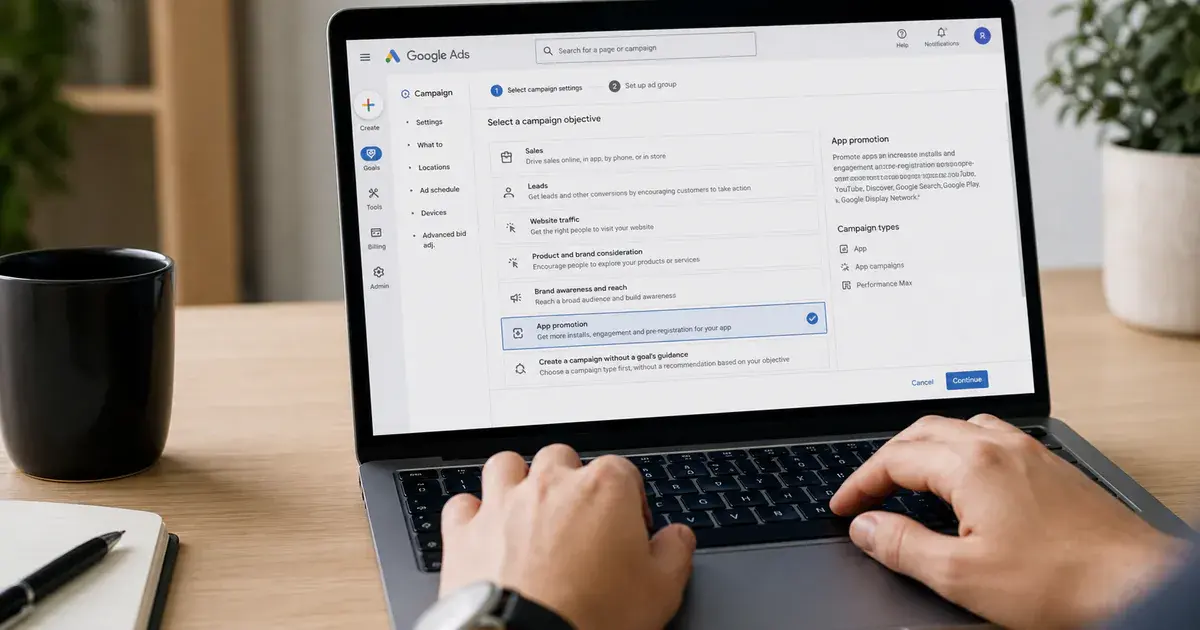
Most App campaigns are lost in the setup screen, not in the auction. Google publishes the budget-to-bid ratios, the conversion-volume floor and the asset counts the system needs, and almost every failing launch has broken one of them before a single impression served. This is the launch sequence in the order the documentation supports it.
Your cost per install has drifted upward for three weeks and the campaign settings have not changed. That combination has a small number of documented causes, and most teams check them in the wrong order — starting with bids, which is the one lever most likely to make the problem worse. This is the fault tree we work through instead.
Most expansion decisions are made on market size, which is the one input that tells you nothing about whether the market will pay you back. The store mechanics make it worse: Google Play targets releases by the country a user registered their account in, not where they are standing, while your ad platform targets something else entirely. This is the sequencing framework we apply to a client's own numbers, with no invented benchmarks in it.
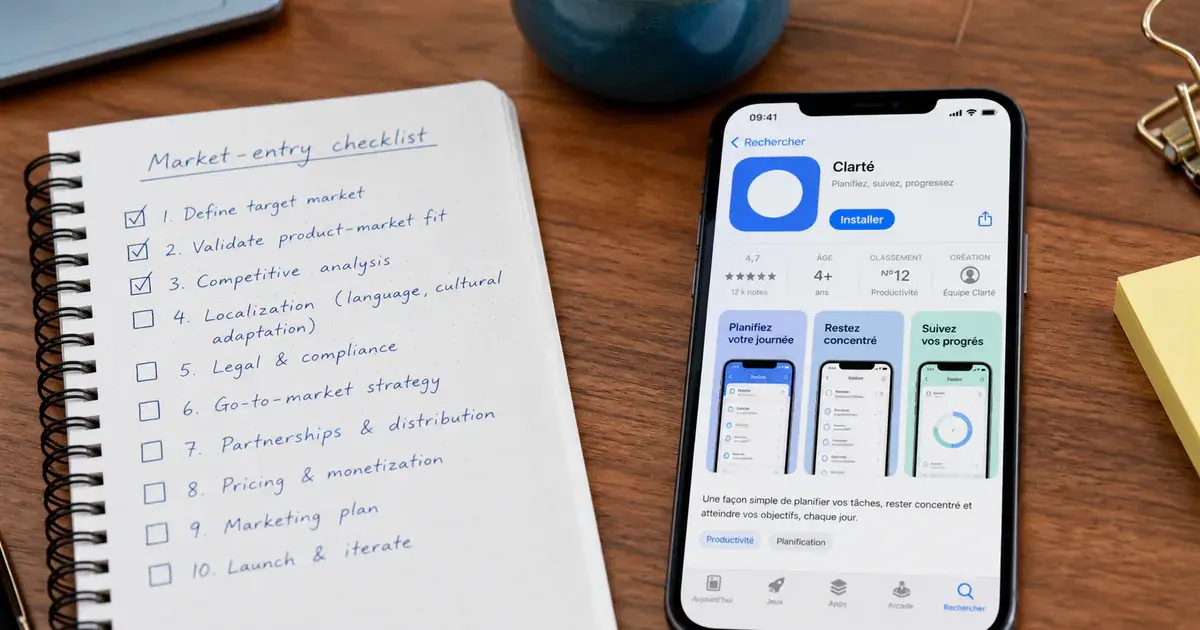
You have picked the market. What breaks next is almost never the choice — it is the order. Pricing that was set before the tax position was settled, a listing translated before anyone checked the store supports the language, availability flipped on before a local payment method existed. Some of those steps are reversible and some are not, and the store documentation tells you which.
A creator posts, your installs rise, and nothing in your dashboard connects the two. The gap is almost never the creator — it is that the link, the listing and the redemption path were designed after the deal was signed instead of before it. This is the mechanics side: what the stores actually hand back to you, and what no amount of briefing can recover.
Every list of the cheapest CPI countries traces back to another list, and none of them trace back to a source you can check. The more useful question is why a market is cheap in the first place, because the same conditions that suppress the install price usually suppress the revenue behind it. This is how to judge a market from data you actually own.
Community distribution fails in a predictable way: the account gets limited, the server gets reported, or the store flags the reviews you asked for. Almost every one of those outcomes is described in a published rule you can read before you write the first message. This is what those rules actually say, and where they cannot be quoted at all.
You doubled the budget and the cost per install went up, so someone concluded the campaign is broken. It usually is not. Audience depth is finite, a tighter target narrows the pool you are allowed to buy from, and the edits people make in a panic cost more than the saturation they were meant to fix.
Every performance team has been told that raising the budget resets the algorithm. Google does not document it that way — the triggers it publishes for the Learning status are bid strategy events, and the budget cautions live in a different place with different conditions attached. This is the operational method for stepping spend up without paying for the same calibration twice.
Every Indian app team eventually asks the same question: TikTok is gone, so where does the short-video budget go? Most answers you will find name a list of domestic platforms without showing you a single line of their advertising documentation. This one is built the other way round, from the ad managers whose rules we could actually read.
The budget is set, the campaign is enabled, and Google is spending nothing — or it was spending fine until Tuesday. These are not the same problem, and neither is the campaign that spends happily while your CPI climbs every week you scale it. Four distinct failures, each with its own diagnosis, and a triage order that stops you from changing settings that were never wrong.
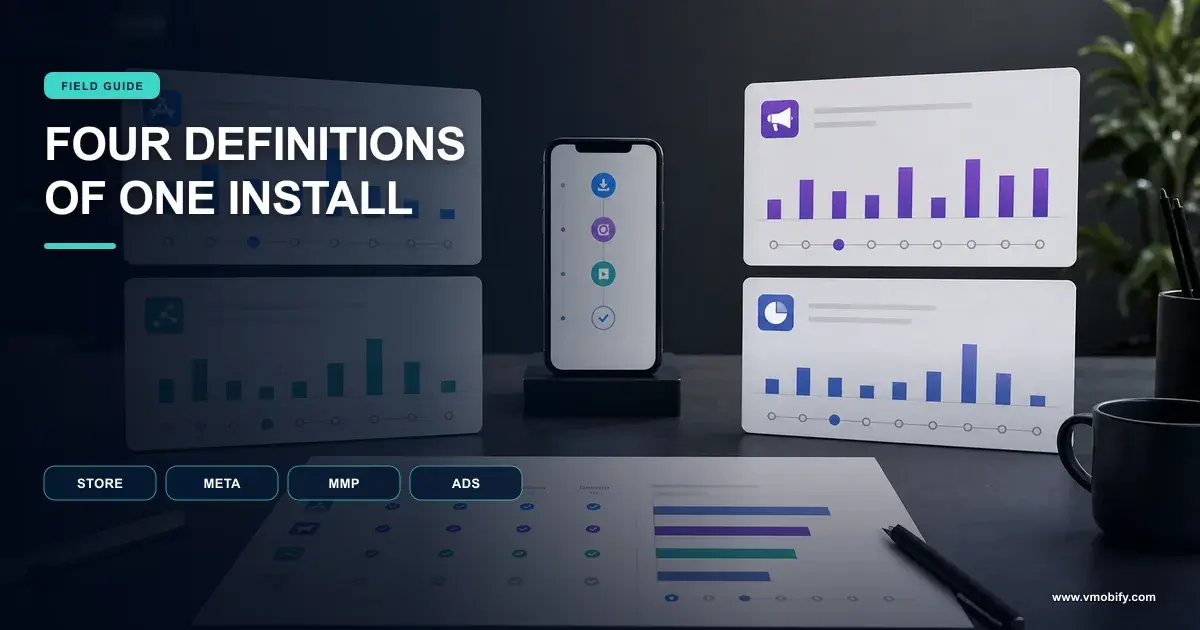
Money left the account, the campaign is live, and two dashboards disagree by 35%. Somebody is going to ask which number is true, and the honest answer is that all of them are — because Meta, your MMP, Play Console and Google Ads each count a different event and call it an install. Here is what each one actually measures, how much gap is normal, and how to reconcile them in half an hour.
Nobody puts crash rate on the growth dashboard, so nobody sees it charging rent. Google reduces the visibility of apps that cross its published thresholds, can put a warning on the store listing visitors are reading, and says outright that a larger app hurts install success. Every one of those raises what you pay for a user — and Google Ads itself tells advertisers to go and check vitals.
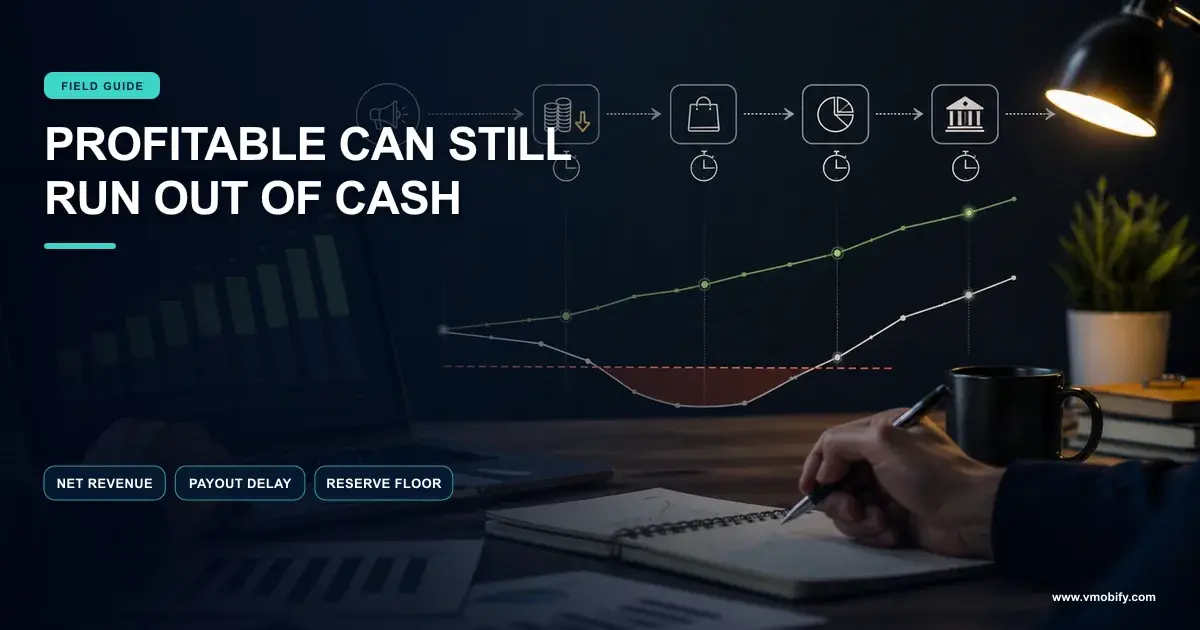
Your payback period is six months and your LTV:CAC looks healthy, so the model says spend more. The model is not wrong — it is answering a different question. Ad spend leaves your account in days, store revenue arrives up to 45 days after the month it was earned, and the platform keeps its share first. That gap, not your payback period, sets your ceiling this month.
The first 100 users are not a smaller version of the first 100,000. They are a different job, done by hand, with no money. This is the playbook for that stage: the free rails both stores already give you, how to use communities without getting banned, what a Product Hunt or subreddit launch honestly returns, and the three gates you should clear before you spend a rupee on installs.
A linkable benchmark for India's mobile app market in 2026 — download scale, smartphone user base, the UPI backdrop, the Android vs iOS split, the high-downloads low-ARPU reality, and which verticals are actually growing. Every figure attributed, framed as reported and directional.
A web-to-app funnel routes the cheap, high-intent traffic you already win on the web — SEO, content, ads — into app installs and in-app revenue, instead of letting it die on a mobile site. This guide covers the mechanics (Smart App Banners, deferred deep links, QR, SMS), when web beats sending people straight to the store, why web purchase flows are growing, and how to measure the whole thing.
Deep links route a tap straight to the right screen inside your app, and deferred deep links carry that destination through an install. This guide explains how both work, how to set up iOS Universal Links and Android App Links correctly, and how to stop links silently falling back to the browser.
The Google Play Install Referrer API is the quiet workhorse behind Android attribution. It hands your app three data points — the referrer URL and two timestamps — and the gap between those timestamps is exactly what lets your MMP detect and block click injection and click spam.
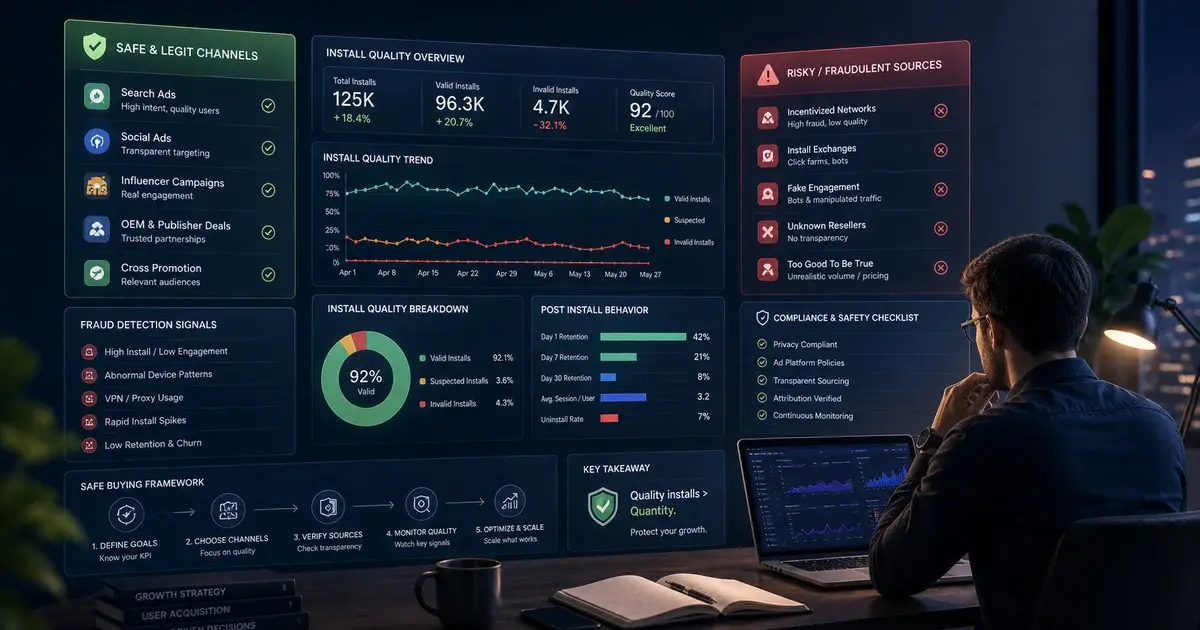
Mobile ad fraud quietly drains a large share of user-acquisition budgets every year. This is a practical 2026 guide to the fraud types, the data signals that expose them, and the layered defences — MMP fraud filters, the Play Install Referrer, allowlists and post-install validation — that actually protect your spend.
ROAS, CAC, LTV:CAC and payback period are the four numbers that decide whether paid growth funds itself or quietly drains your runway. Here is how to calculate each one correctly, why the 3:1 ratio is a rule of thumb and not a law, and how to allocate a UA budget by marginal ROAS in a low-ARPU market.
Mobile attribution is how you connect an ad click to the install and the revenue it produced. This guide explains what an MMP does, how matching actually works, what privacy changed on iOS and Android, and how to set up attribution correctly without inventing numbers.
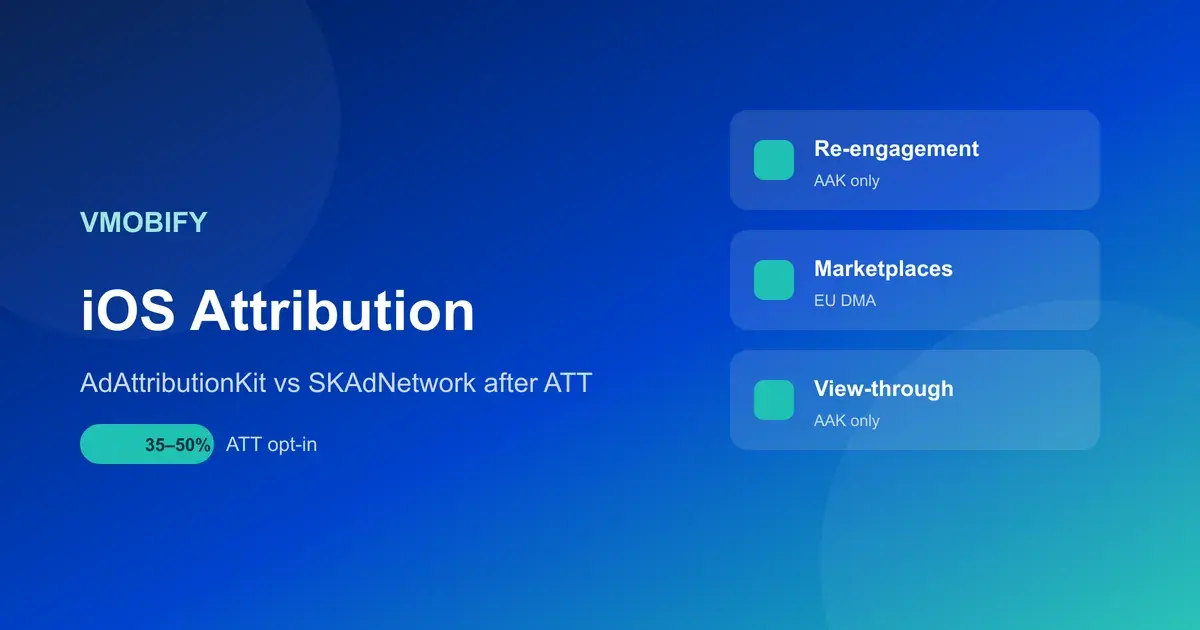
After ATT, iOS attribution runs on Apple's privacy-preserving APIs. SKAdNetwork 4 still works but is in maintenance mode; AdAttributionKit is where Apple is heading. Here is how each one works, where they differ, and why you should run both in 2026.
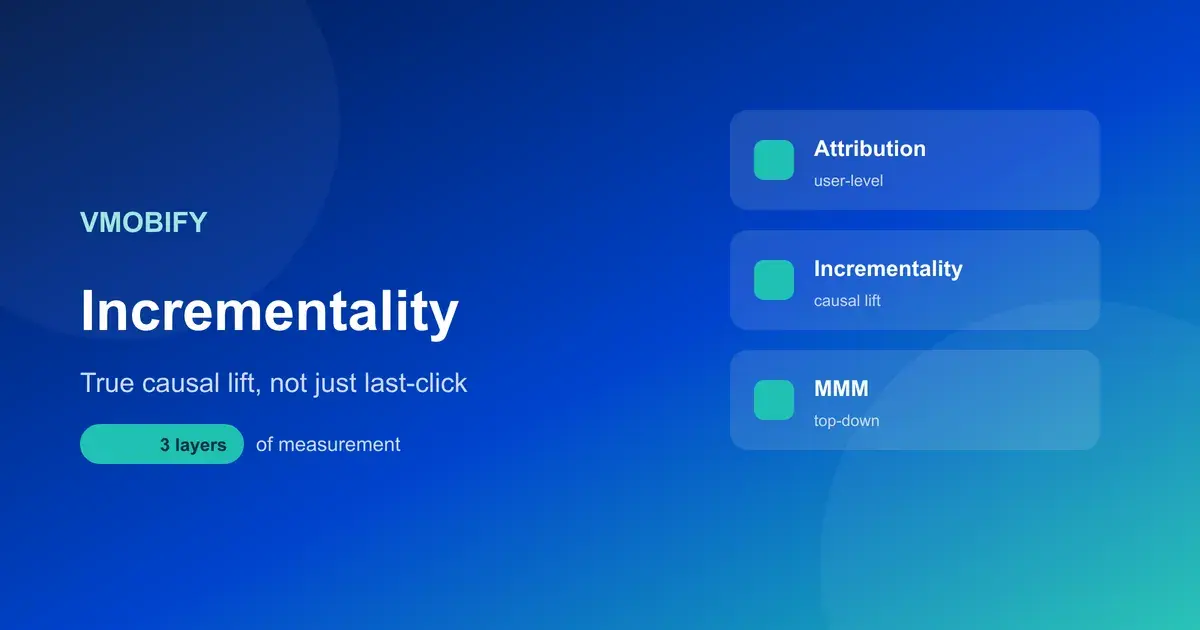
Attribution tells you which ad got the last click — not which spend actually caused the install. This is how incrementality testing and media-mix modelling measure causal lift, why they layer on top of attribution rather than replace it, and when each is worth running.
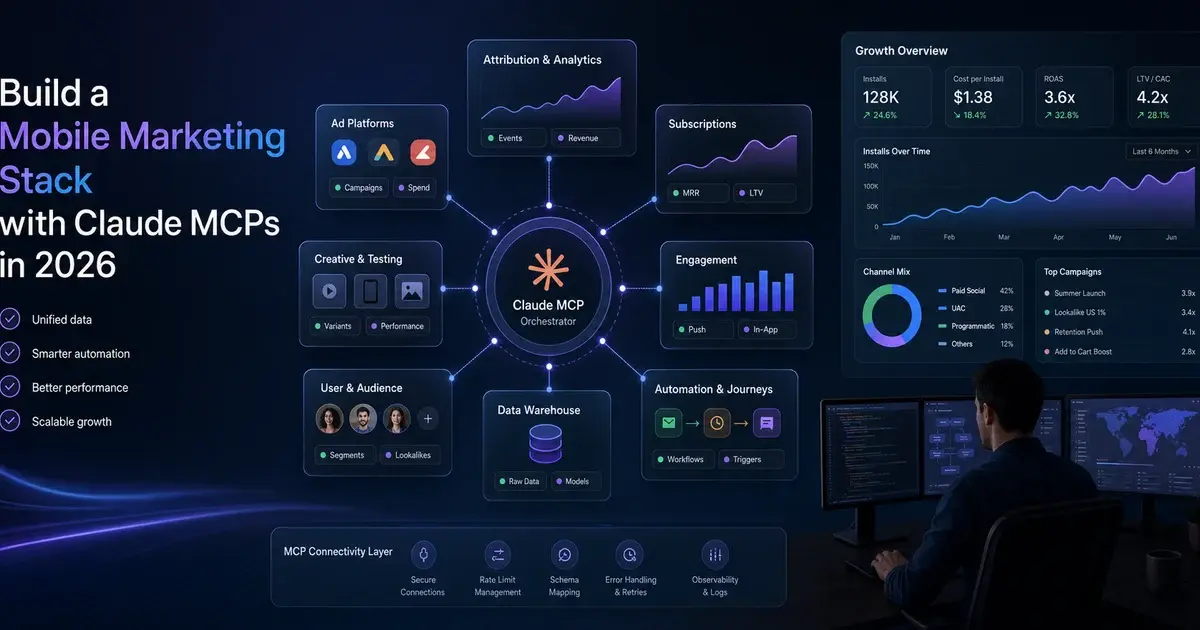
The fragmentation tax that defined mobile marketing for a decade is finally getting refunded. This guide walks through every layer of the MCP-connected stack — attribution, analytics, subscriptions, engagement, and ads — with real install commands, real prompts, and honest limits every operator must know.
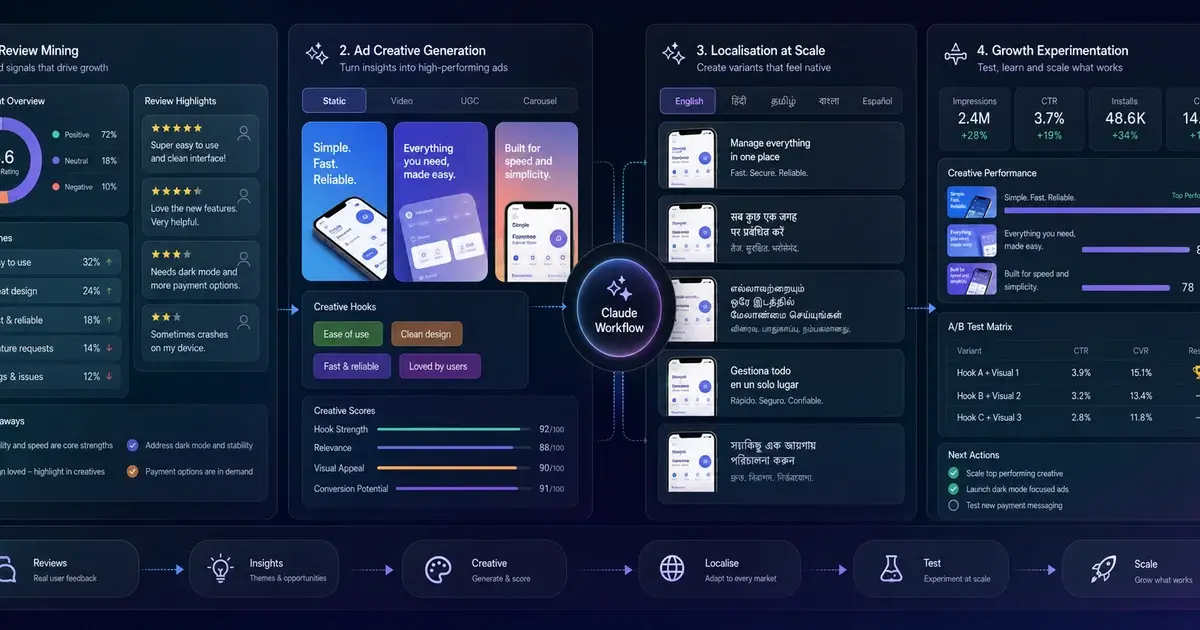
A skilled copywriter ships 8-12 ad variants in a week. Claude ships 50+ in four hours — and spends the rest of the week mining 5,000 reviews, localising 30 store listings, and running statistically rigorous A/B tests. This is the compound-workflow playbook.
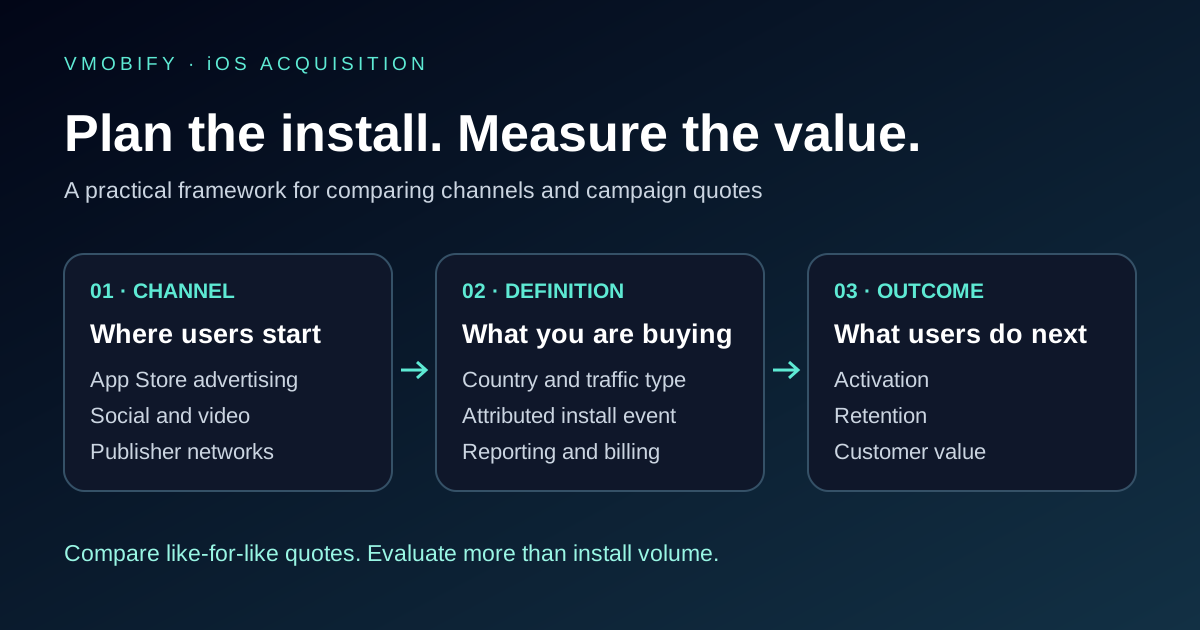
Compare iOS acquisition channels and campaign quotes using consistent definitions. Learn what to ask about traffic, attribution, billing and post-install outcomes before buying.
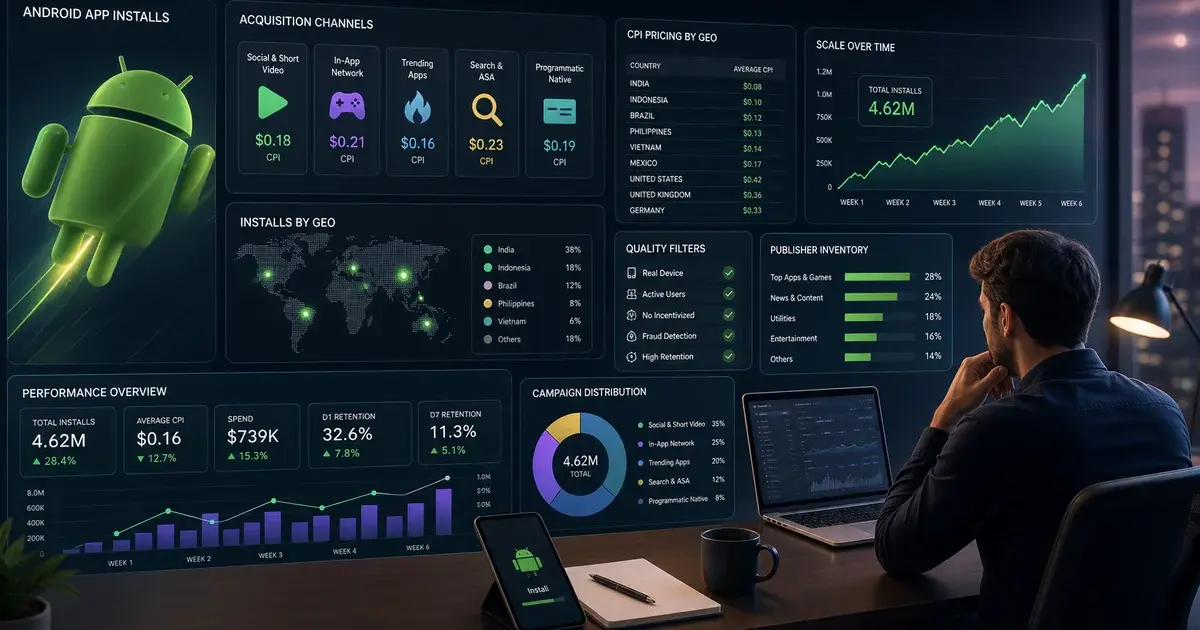
Android installs are structurally cheaper than iOS, but only if you know which channels to use, how to protect quality, and how to time a burst that actually moves Google Play rankings. This is the complete 2026 playbook.
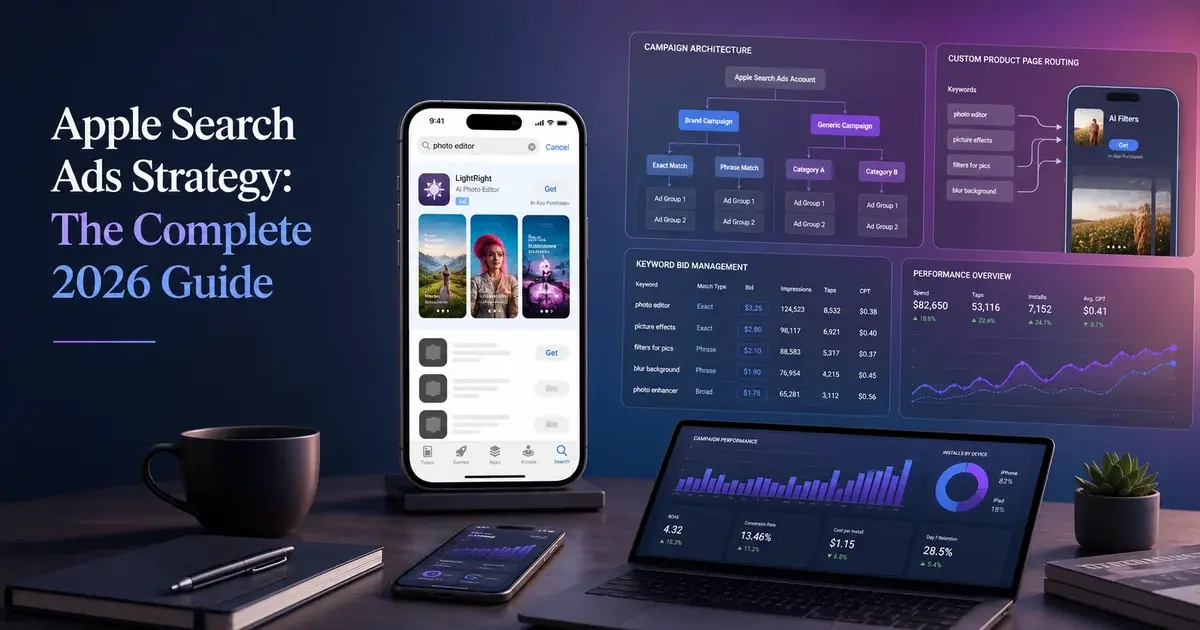
Apple Search Ads consistently delivers the highest-intent iOS traffic of any paid channel — yet most teams under-optimise it by treating it as a simple keyword auction. This guide covers every layer: campaign architecture, keyword strategy, Custom Product Page integration, AdAttributionKit measurement, India market opportunity, and the benchmarks we see across 300+ managed apps.
TikTok is no longer optional for mobile app user acquisition. This playbook covers campaign setup, creative formats, Pangle network, MMP integration, and the CPI benchmarks you should expect in 2026.
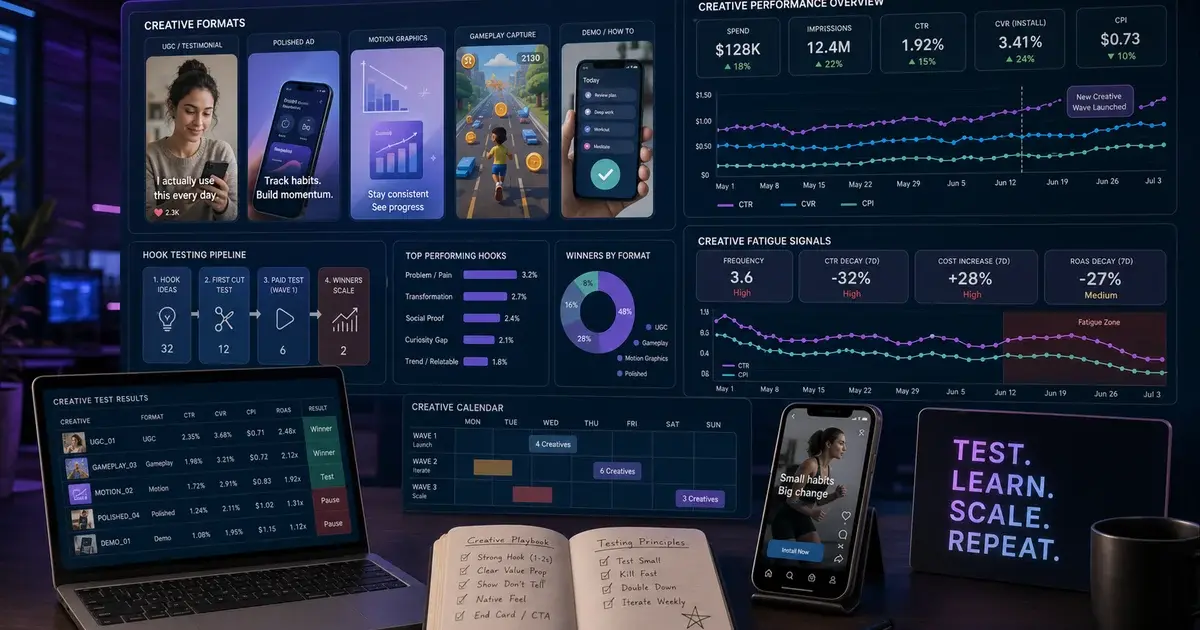
Creative is now the single most decisive variable in mobile UA — accounting for approximately 56% of incremental app installs. This guide covers every format in the 2026 taxonomy (UGC, AI-generated, polished produced, motion graphic, gameplay capture, testimonial), hook science, platform-native adaptation, creative refresh cycles, and AI tooling — with specific numbers for fintech, gaming, and India Tier 2/3.
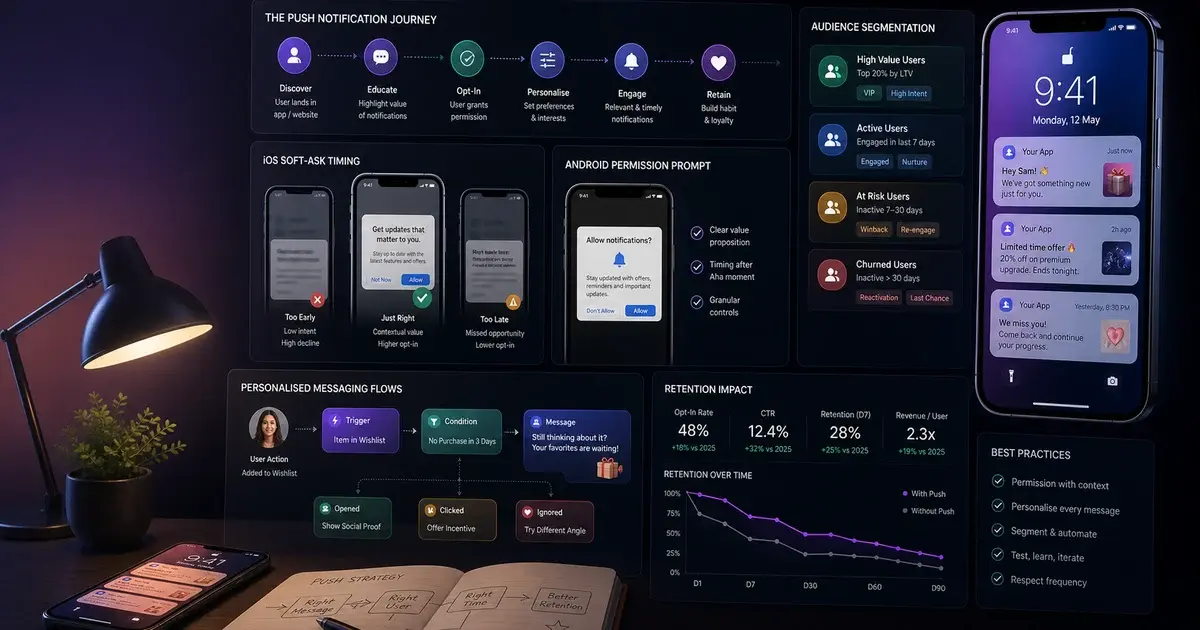
Push notifications are the highest-return retention channel in mobile — and the fastest route to an uninstall if you get the strategy wrong. This guide covers iOS soft-ask timing, Android 13 permission changes, segmentation tiers, personalisation at scale, and the 30-day onboarding sequence that consistently delivers 2–3× D30 retention across our portfolio of 300+ apps.
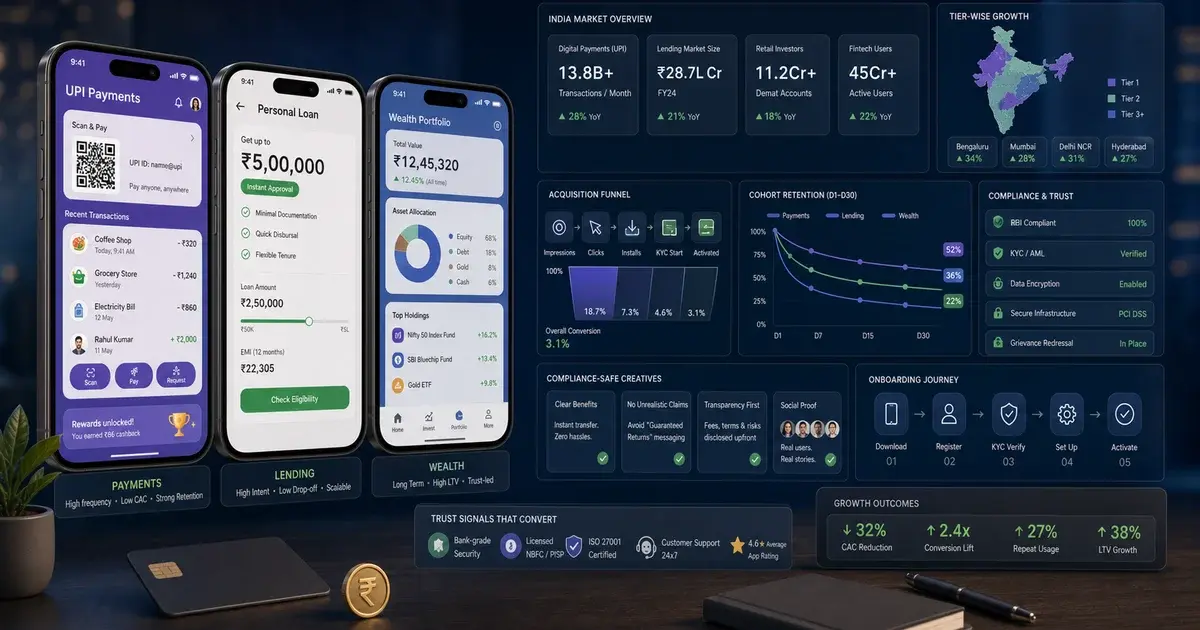
India's fintech market is a ₹65B+ opportunity with regulatory rules that make or break every campaign. This guide covers UPI acquisition triggers, SEBI/RBI/IRDAI compliance for creatives, CPI benchmarks by sub-vertical, and the vernacular ASO edge that most growth teams leave untapped.
Most "fast install" hacks blow up your ranking, drain your budget, or get your app suspended. These seven tactics deliver real installs in 72 hours — and they actually retain users.
Mass UA is not about spending more — it is about building a system where every rupee multiplies. Here is the blueprint we use to scale apps past 100K installs per month.
"Buy app installs" returns a thousand sketchy vendors. Most will get your app suspended. Here are the channels that genuinely work, the red flags to spot, and how to evaluate a vendor in 10 minutes.
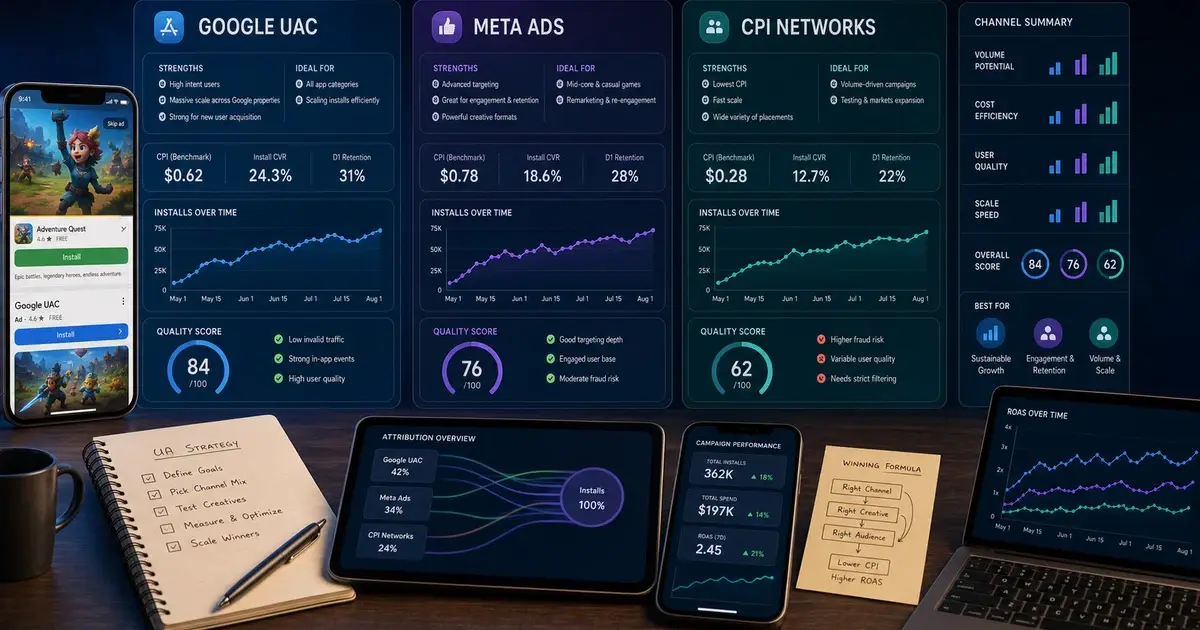
Most teams default to whichever channel they tried first. Here is the honest 2026 comparison across pricing, quality, attribution, and scalability — plus the stage-based framework for deciding which channel earns your next rupee of paid spend.
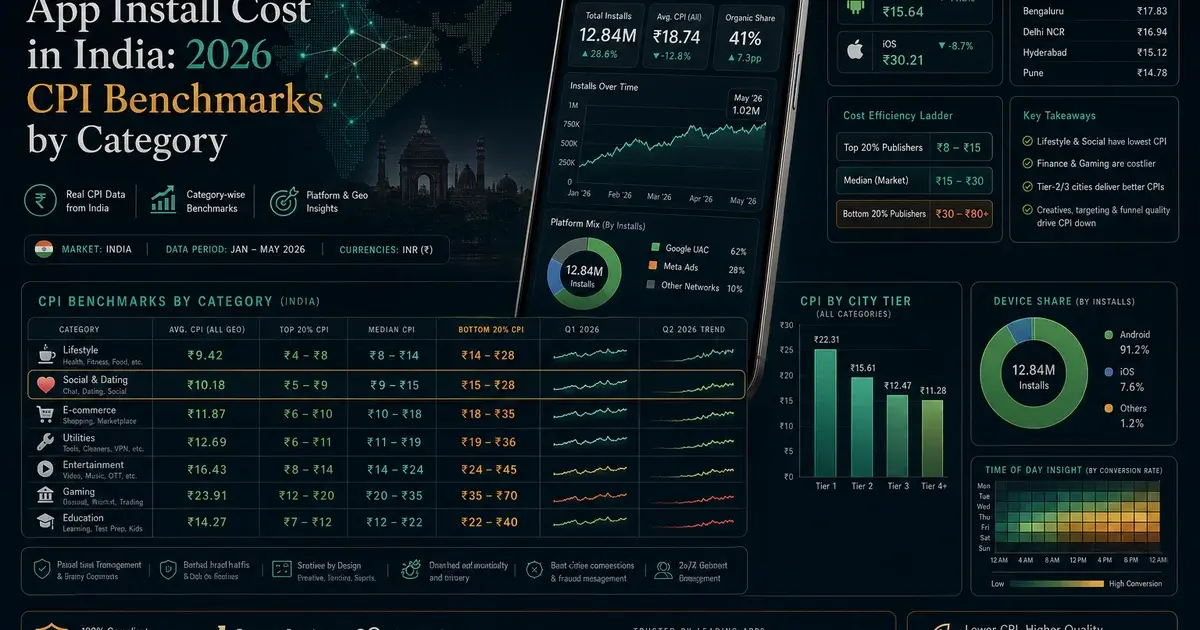
Indian CPI benchmarks vary 10x across categories and 3x within the same category depending on channel and tier. Here are the real numbers from our portfolio and how to bring yours down.
Gaming is the largest mobile category in India by install volume — and the most ruthless on CPI economics. Here is the playbook for hyper-casual, mid-core, and real-money apps.
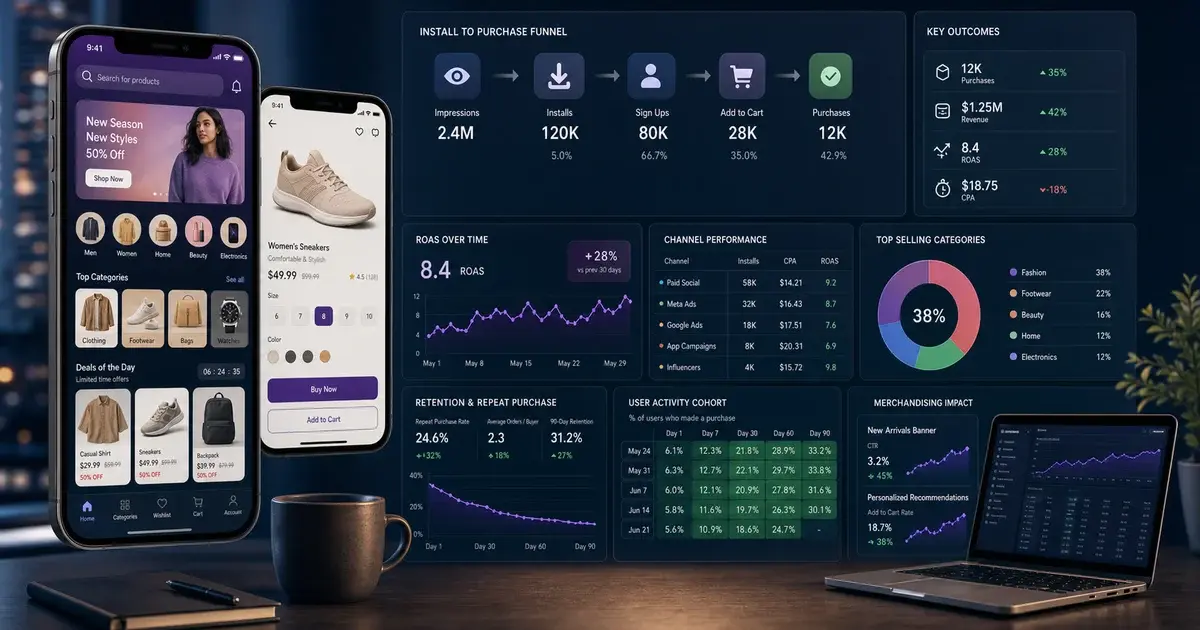
Most ecommerce app marketing fails because teams optimise for installs instead of first purchase. Here is the install-to-buyer playbook that scales repeat revenue.
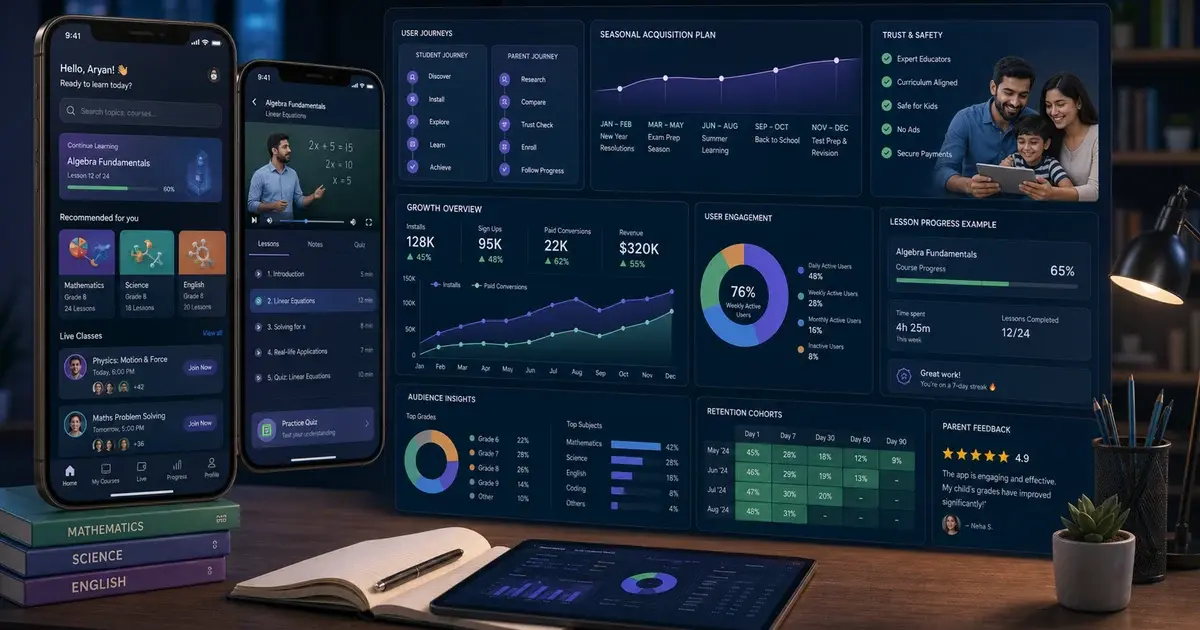
EdTech marketing has two buyers, multiple seasons, and a trust barrier higher than any other vertical. Here is the playbook that works for K-12, test prep, and upskilling apps.
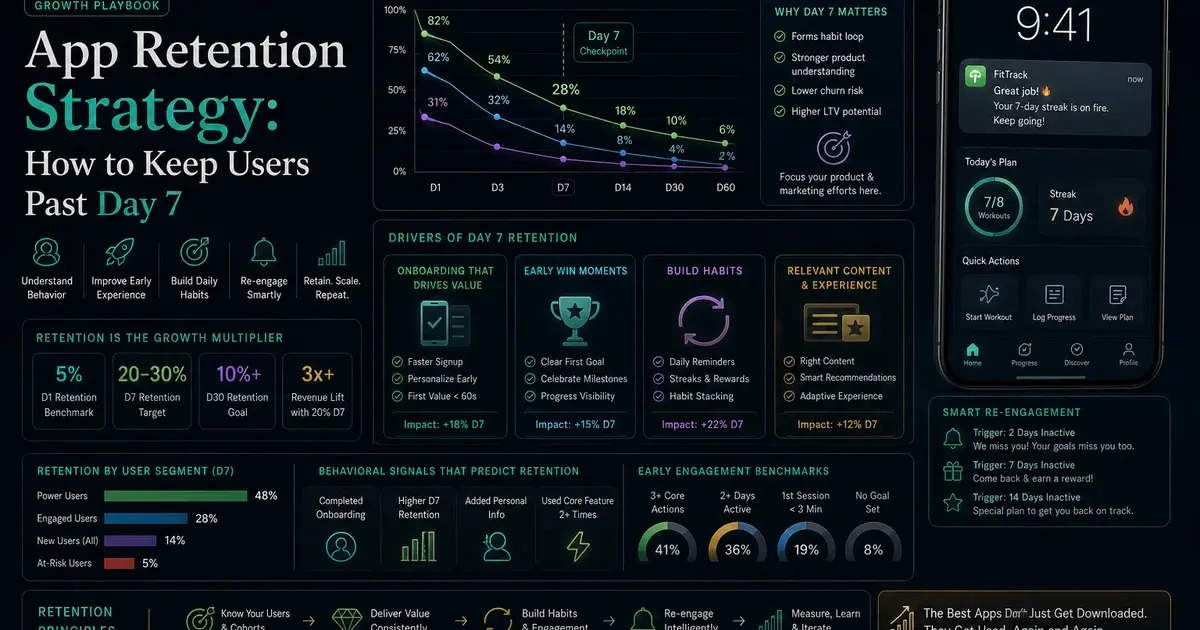
Spending more on acquisition while retention is broken is the most expensive mistake in app growth. Here is the D1, D7, D30 retention playbook — benchmarks by vertical, onboarding optimisation, push strategy, churn prediction, and re-engagement sequences that actually compound LTV.
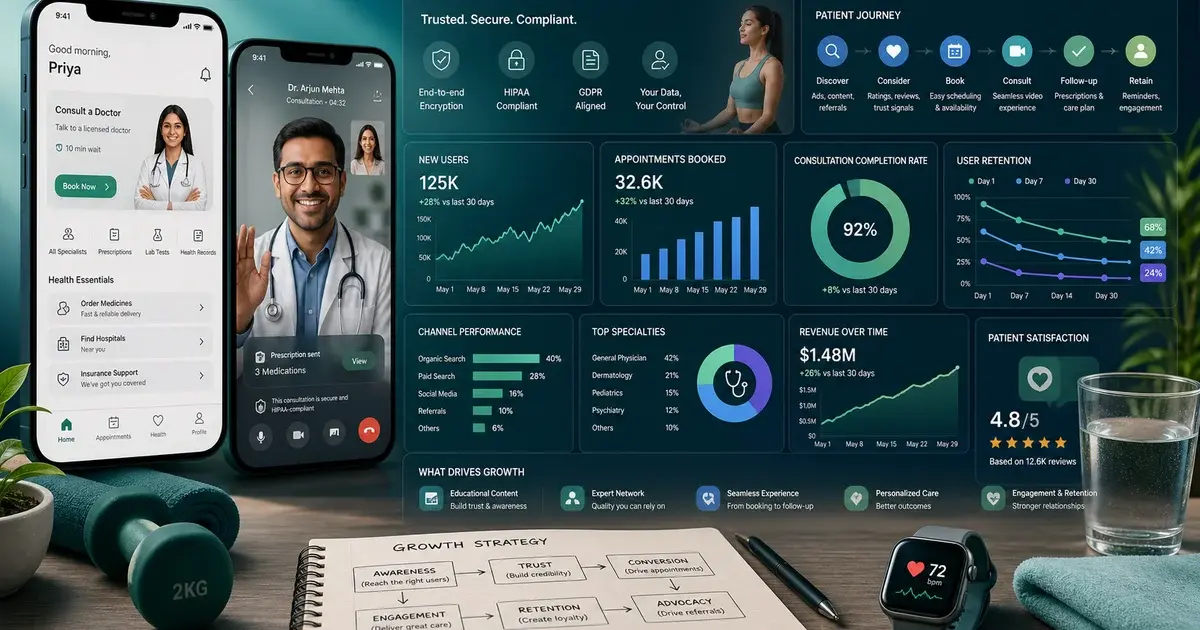
Healthcare app marketing is constrained by privacy, regulation, and a higher trust bar than any other consumer vertical. Here is the playbook that works.
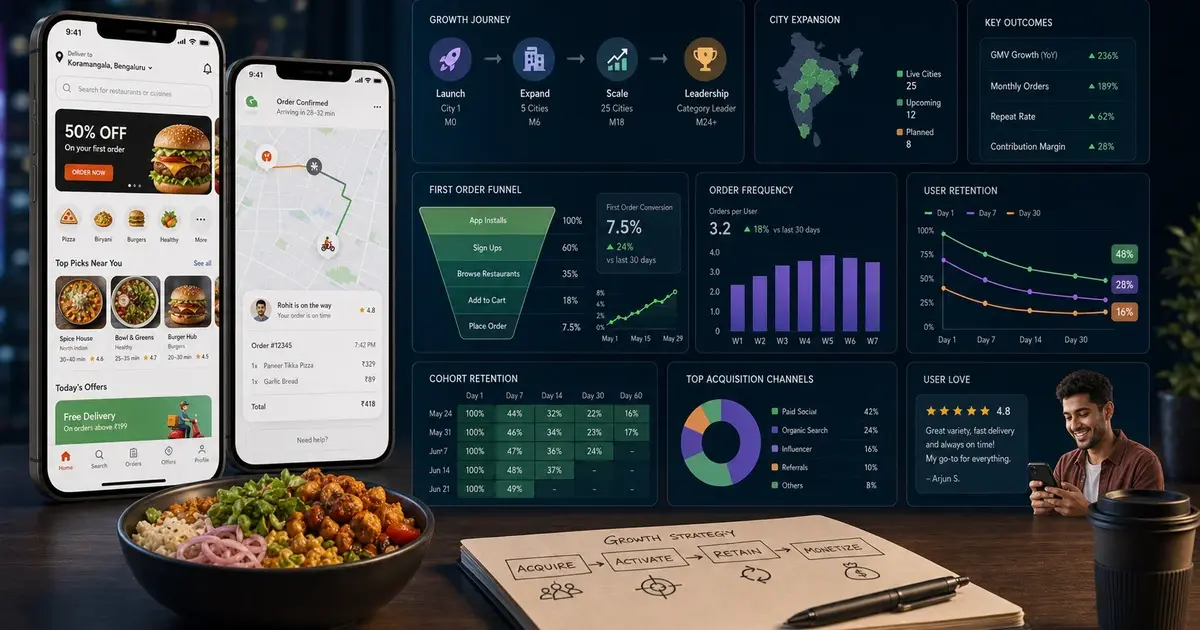
Food delivery is one of the toughest verticals to compete in — duopoly markets, supply-side cost, and a frequency game. Here is the playbook for new entrants and specialised players.
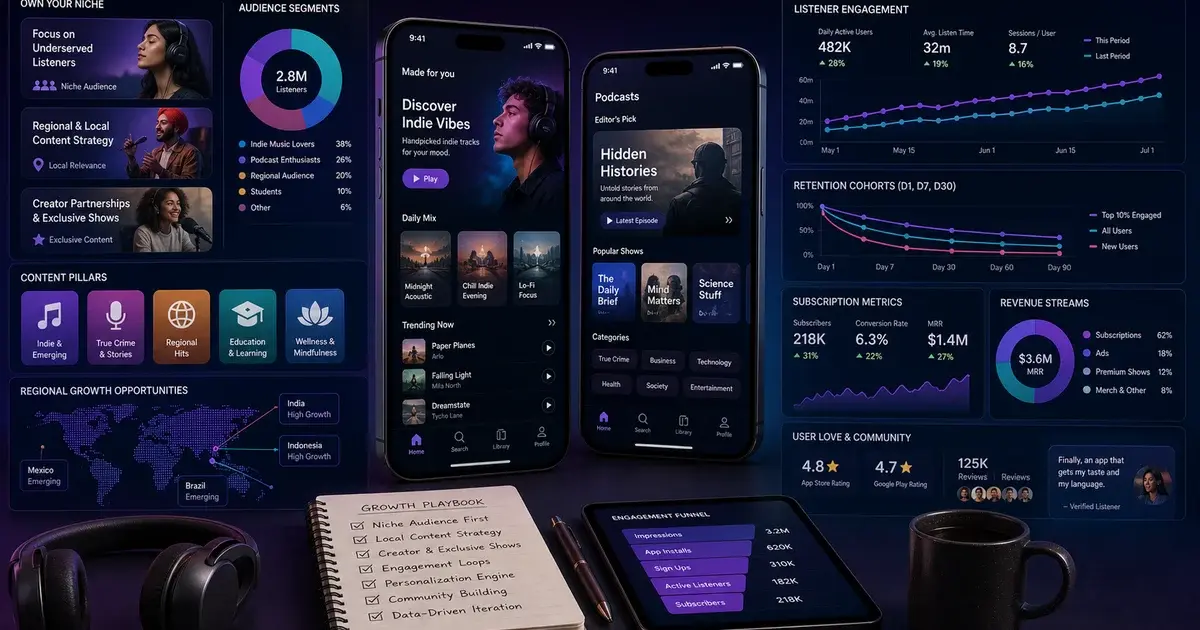
Spotify wins globally, but niche music and podcast apps still dominate categories like Hindi devotional, regional language, and audio-only content. Here is how.
Real estate is the highest-LTV install in mobile but the hardest to attribute. Here is the buyer-intent playbook for property apps and broker platforms.
Indian travel rebounded hard post-pandemic. MakeMyTrip and Goibibo dominate but niche players (homestays, religious travel, train-only) are winning meaningful slices.
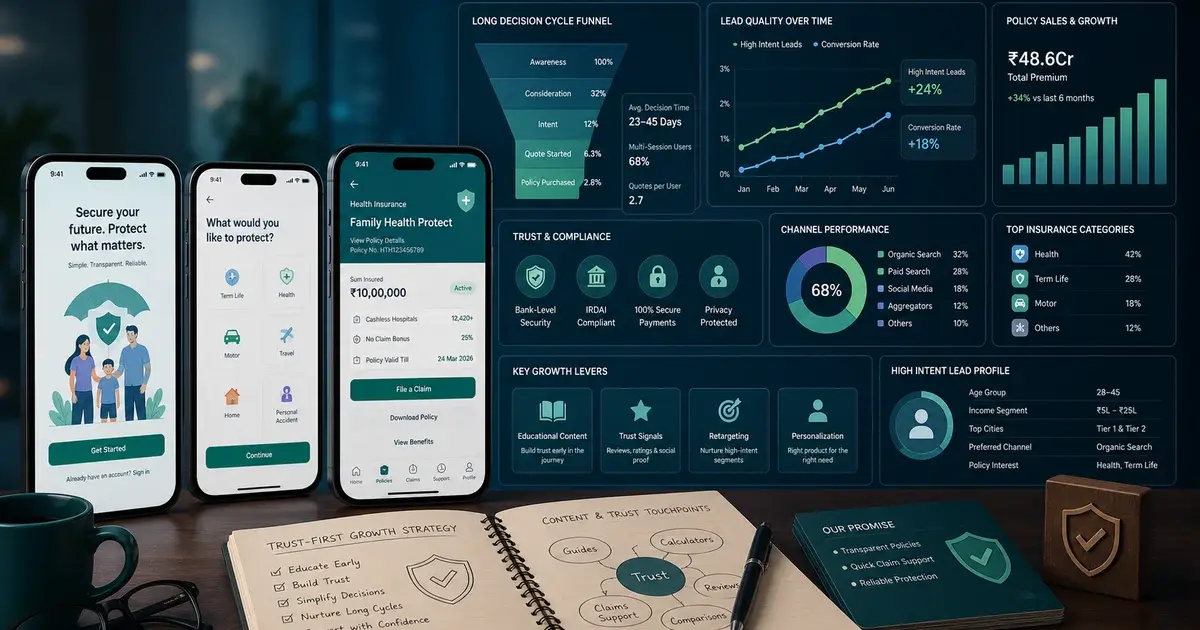
Insurance app marketing is a trust game played over weeks. Compliance constraints + high CAC + long decision cycles make it one of the toughest verticals — and one of the most rewarding.
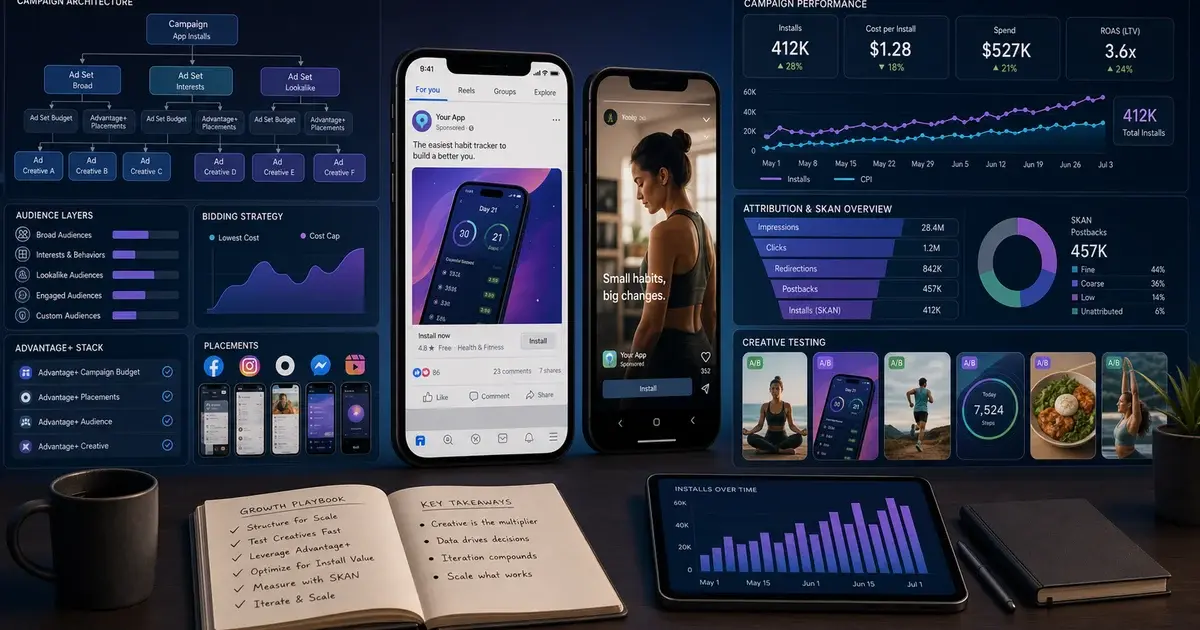
A practical guide to Meta app promotion: choose a meaningful conversion goal, validate your events, plan creative tests and judge results using acquisition quality and mature cohorts.
Scaling from 10K to 1 million downloads is a categorically different game. This playbook covers the mindset shifts, channel stack, creative velocity, global expansion tactics, and retention mechanics that separate apps that plateau from the ones that compound to 1M.
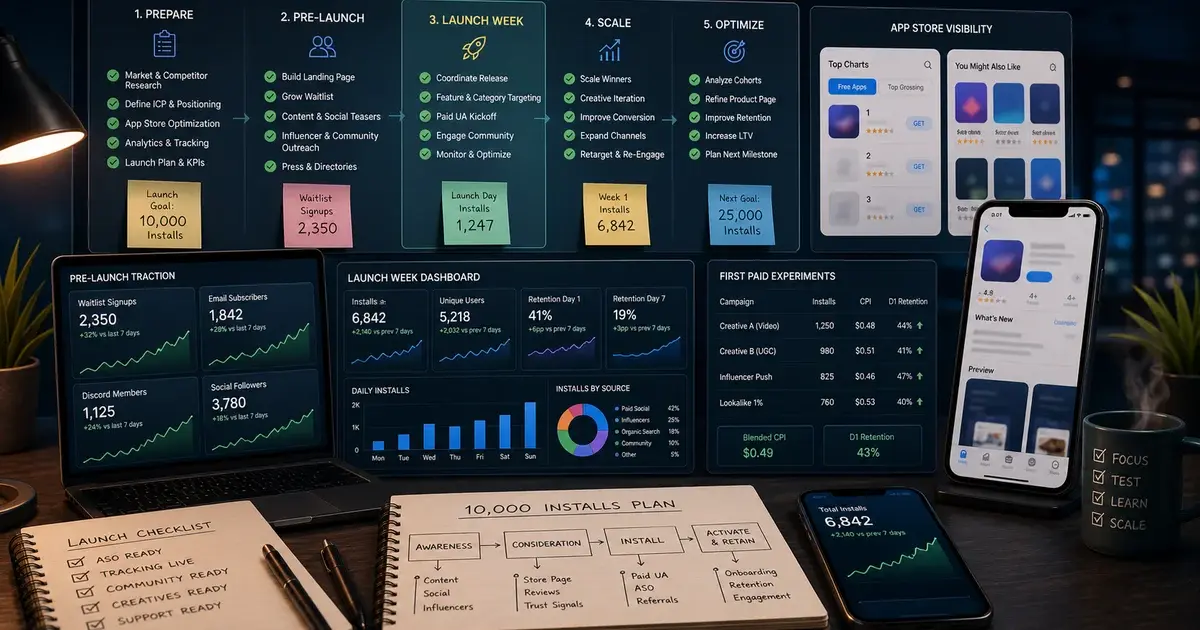
The first 10,000 installs are the hardest—and the most important. Here is the exact launch playbook we use across our portfolio: pre-launch community building, a coordinated launch week, day-one ASO, micro-influencer cold outreach, review velocity, and your first paid experiment.
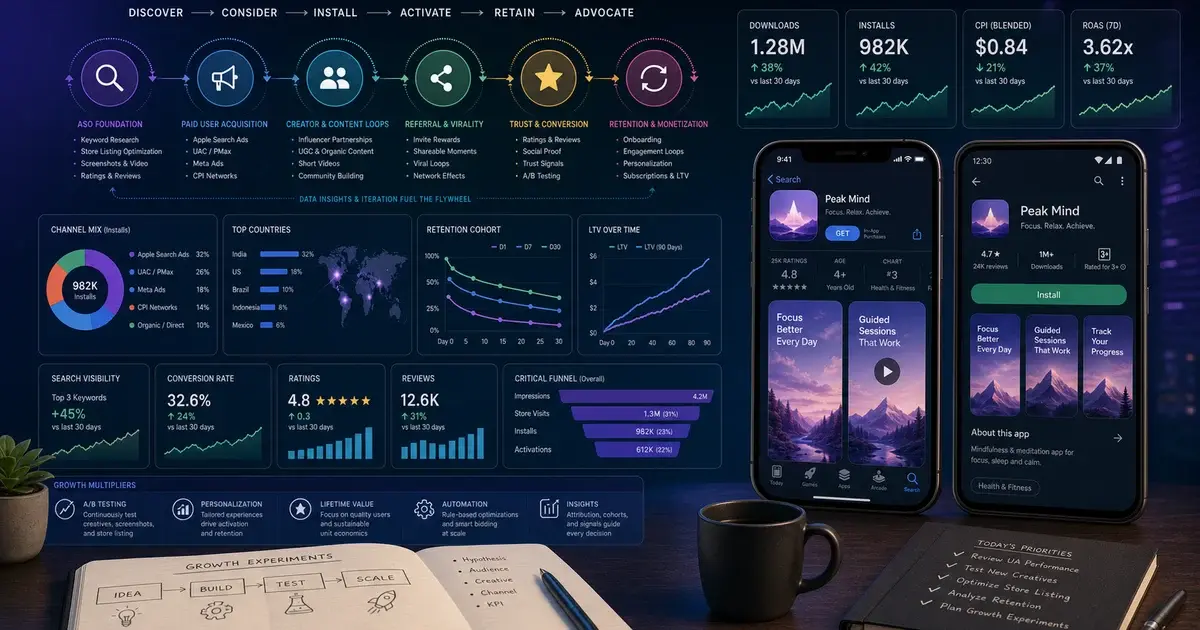
Downloads stalling? Here is the 2026 playbook we use across 300+ apps—covering ASO, paid UA, social and creator tactics, referrals, ratings, and retention loops that turn installs into compounding growth.
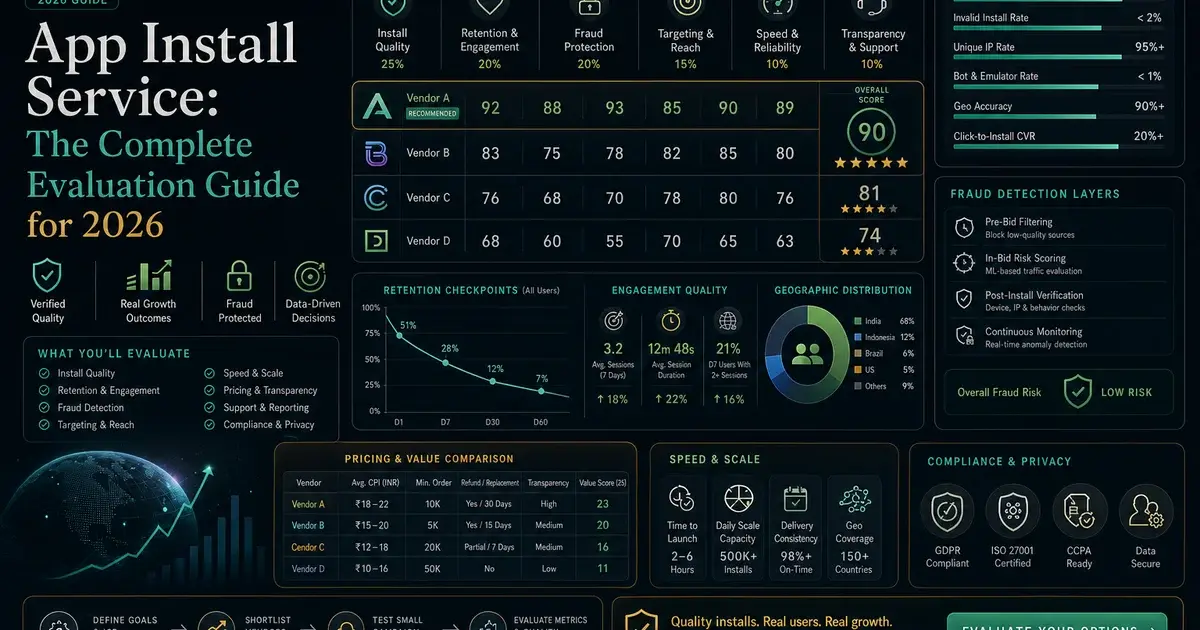
Not all app install services are equal. This guide explains how to evaluate providers on what actually matters — post-install quality, fraud protection, MMP integration, and vertical experience — so you hire an agency that grows your app, not just your download count.
Join 300+ apps that chose the best mobile marketing company. We've scaled our own apps to 30M+ downloads and delivered 100M+ installs for clients.End-to-end mobile marketing growth studio with proven expertise.
 User Acquisition