App Growth Loops: How Viral and Content Loops Compound Growth
A funnel is a one-way pipe that leaks; a growth loop is a closed circuit where the output of one cycle becomes the input of the next. This guide explains viral loops, content and UGC loops, paid loops, the k-factor and cycle time, network effects, how to measure a loop, and why India-first apps compound fastest through WhatsApp and vernacular content.
On this page
- What is a growth loop, and why does it beat a funnel?
- How do viral loops work, and what are k-factor and cycle time?
- How do content and UGC loops compound growth?
- How do paid loops and sales loops reinvest growth?
- How do you choose the right growth loop for your app?
- How are network effects different from virality?
- How do you instrument and measure a growth loop?
- How do growth loops work for India?
- How do you design a referral loop that is not gameable?
- Which pitfalls cause growth loops to break?
- Frequently Asked Questions
What is a growth loop, and why does it beat a funnel?
A growth loop is a closed system in which the output of one cycle becomes the input of the next — a new user creates the thing (an invite, a post, a rupee of revenue) that acquires the next user — whereas a funnel is a one-way pipe that leaks at every stage and stops the moment you stop pouring money into the top. The distinction sounds academic until you watch it play out over twelve months of growth, where it decides whether your acquisition cost rises or falls as you scale.
The funnel has been the default mental model for app growth for over a decade: awareness at the top, then consideration, install, activation, and retention narrowing toward the bottom. It is a useful diagnostic — it tells you where users drop off — but it is a terrible engine. A funnel has no memory and no compounding. Every install you want next month requires fresh spend next month, because the users who came out of the bottom of the funnel do nothing to bring in the users who enter the top. You are forever refilling a leaking bucket.
A loop closes that gap. The growth-loops framework, popularised by Brian Balfour and the team at Reforge and widely taught through Lenny's Newsletter, reframes growth as a system of reinforcing cycles rather than a linear sequence. The core question changes from "how do I move users down the funnel?" to "how does each user I acquire help me acquire the next one?" When you can answer that with a specific mechanism, you have a loop. When you cannot, you have a funnel and a media budget.
The practical consequence is compounding. In a funnel, output grows linearly with input — double the spend, roughly double the installs. In a loop, this period's output is added to the base that drives next period's output, so growth accelerates even at constant input. That is why the apps that escape the treadmill of ever-rising paid costs almost always have at least one functioning loop underneath their paid user acquisition.
Across our 300+ apps managed since 2013, the single clearest predictor of whether an app's blended cost-per-install falls or climbs as it scales is whether a real loop sits beneath the paid layer or not.
None of this means funnels are useless. You still use funnel thinking to find and fix leaks inside a loop — a viral loop with a broken invite-acceptance step is just a slow loop. The shift is in what you optimise for: a funnel mindset optimises a conversion rate; a loop mindset optimises the rate at which the system reinvests its own output. The rest of this guide is about building, measuring, and protecting that reinvestment.
How do viral loops work, and what are k-factor and cycle time?
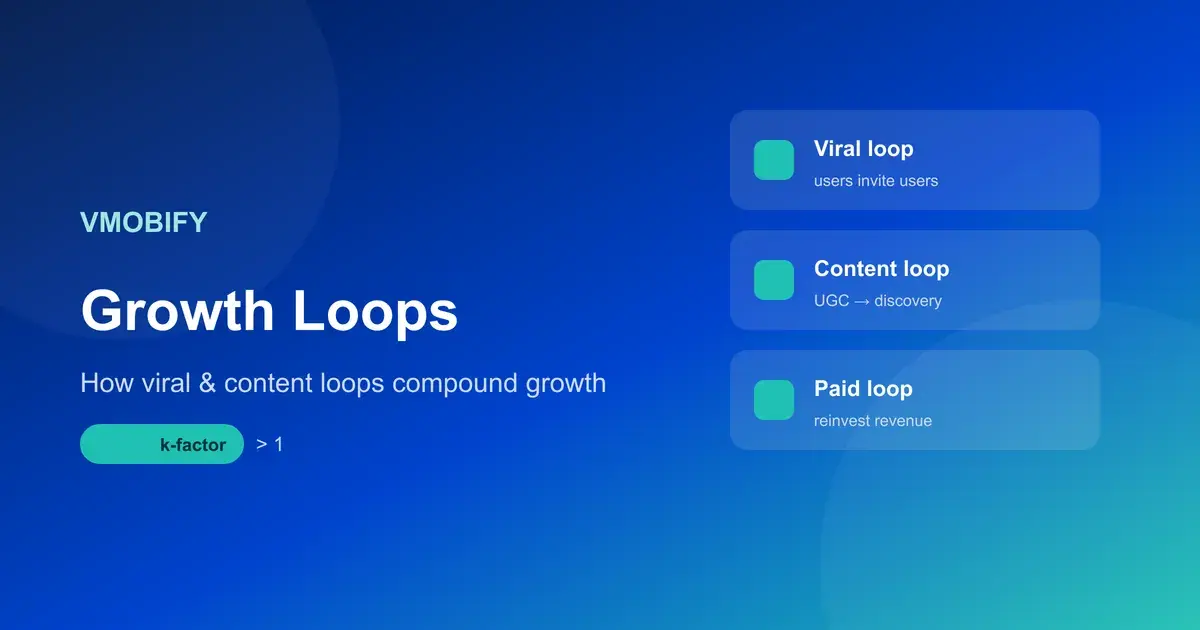
A viral loop works when an existing user takes an action that exposes the product to new users, some of whom join and repeat the action — and its strength is governed by two numbers: the k-factor (how many new users each user brings in) and the cycle time (how long one full pass of the loop takes). Most teams obsess over the first and ignore the second, which is exactly backwards for fast-moving categories.
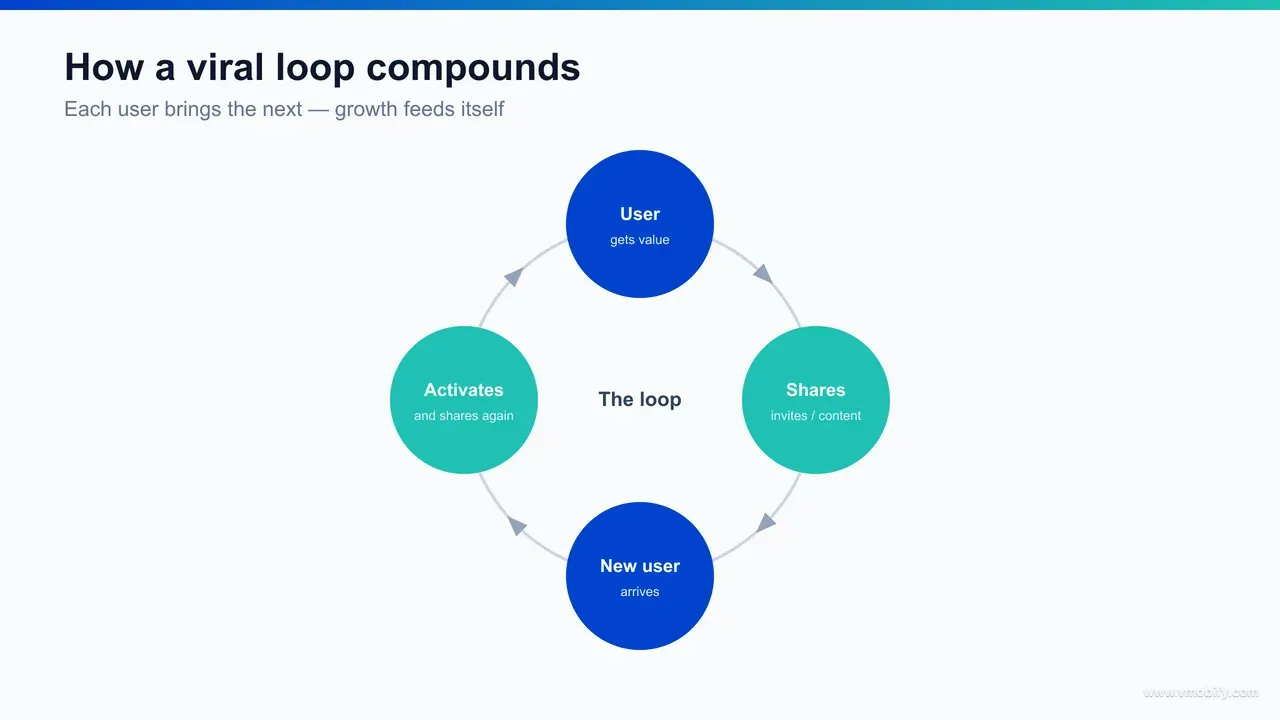
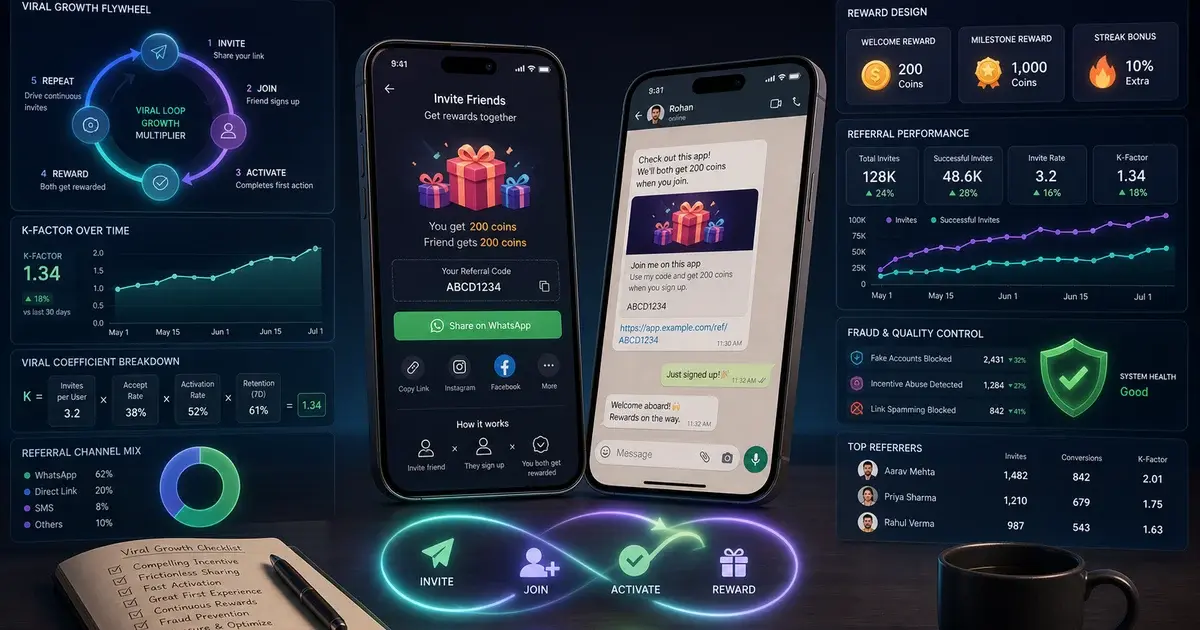
The k-factor, or viral coefficient, is the headline metric: k = i × c, where i is the average number of invites or exposures each user generates and c is the conversion rate of those exposures into new active users. At k = 1.0 the loop is self-sustaining; above 1.0 it compounds exponentially with no extra spend; below 1.0 it still meaningfully lowers your effective acquisition cost by funding free installs alongside every paid one. We cover the k-factor maths and incentive design in depth in our guide to building a mobile app referral programme, so this section stays on the loop mechanics rather than re-deriving the formula.
Cycle time is the half nobody talks about, and it often matters more. Cycle time is the elapsed time from one user joining to that user generating the invite that brings in the next user. Andrew Chen's writing on viral mechanics — including the well-known law of shitty clickthroughs — makes the same point from the other direction: invite channels decay over time, so the speed at which you complete and re-seed cycles is what keeps a loop alive as its raw conversion rate erodes.
A loop with k = 0.5 and a one-day cycle will out-compound a loop with k = 0.7 and a three-week cycle, because the faster loop completes far more cycles in the same calendar window.
There are two broad shapes of viral loop. Inherent or intrinsic virality is built into the product's core action — you cannot use the thing properly without exposing it to others. A messaging app spreads because messaging a non-user is the product; a payment app spreads because paying a non-user pulls them in. Incentivised or artificial virality is bolted on — a referral reward, a "share to unlock" mechanic. Dropbox's double-sided referral, where both the inviter and the new user received extra storage, is the canonical example of incentivised virality designed so well it felt intrinsic. WhatsApp and Instagram, by contrast, grew through inherent invite loops: inviting your contacts or following friends was the product, not a bolt-on. The exact growth figures those companies achieved are widely cited but worth treating as illustrative — the durable lesson is structural, not numerical.
The best viral loops also shorten the path from joining to inviting. If a new user has to reach an "aha" moment before the loop can fire again, then your activation experience is part of your viral loop, not separate from it. Compress the time-to-value and you compress cycle time, which compounds harder than any incentive tweak.
How do content and UGC loops compound growth?
A content loop compounds when users create content inside your product, that content becomes a discovery surface — indexed by search engines, recommended by feeds, or shared directly — those discovery surfaces bring in new users, and some of those new users create more content, widening the surface with every cycle. It is the slowest loop to start and the hardest to kill once it is running.
The mechanics differ fundamentally from a viral loop. A viral loop moves person-to-person and decays as channels saturate; a content loop builds a durable, accumulating asset. Every user-generated page, video, answer, or pin is a permanent piece of acquisition inventory that keeps working long after it was created. Pinterest is the textbook case: users save and create pins, those pins get indexed and surfaced in search, search brings in new users looking for ideas, and those new users save more pins. YouTube runs the same loop with video, and Quora with questions and answers — content created by users becomes the discovery layer that recruits the next cohort of creators. None of these companies could have bought that discovery surface with media spend; the users built it.
What makes content loops powerful is non-linear accumulation and near-zero marginal decay. A paid channel delivers a user today and nothing tomorrow. A piece of UGC delivers a trickle of users every month for years, and because new users keep adding to the pile, the total discovery surface grows faster than the user base. the growth-analytics literature frames this as the difference between renting demand (paid) and owning a compounding asset (content) — the loop is slower to register on a dashboard but it changes the slope of the curve rather than just its height.
Content loops are not only for content-first products. Any app that produces shareable, indexable output can build one: a fitness app whose users share workout summaries, a fintech app that generates a public profile or leaderboard, an edtech app whose lessons or answers are discoverable. The design questions are always the same three. First, does using the product naturally create an artefact? Second, is that artefact discoverable by people who are not yet users — through SEO, social feeds, or direct shares? Third, does a meaningful fraction of the people who arrive via that artefact go on to create their own? If any of the three is broken, the loop stalls.
The trade-off is patience. In our portfolio, content loops have been the highest-leverage growth mechanism for the apps that committed to them and the most disappointing for the ones that expected paid-channel timelines. A content loop typically shows little for the first two to three quarters and then bends the cost curve sharply downward as the accumulated surface crosses a threshold.
Teams that pull the plug at month four — judging it against a paid CPI benchmark — kill the one loop that would have eventually made their retention and acquisition economics defensible.
How do paid loops and sales loops reinvest growth?
A paid loop turns spend into users, users into revenue, and a fixed share of that revenue back into spend — so the loop is self-funding and can scale as long as the revenue a user generates exceeds the cost to acquire them; a sales loop does the same with humans and pipeline instead of ad auctions. Paid acquisition is usually dismissed as "not a loop" because money is an external input, but a well-run paid system absolutely closes.
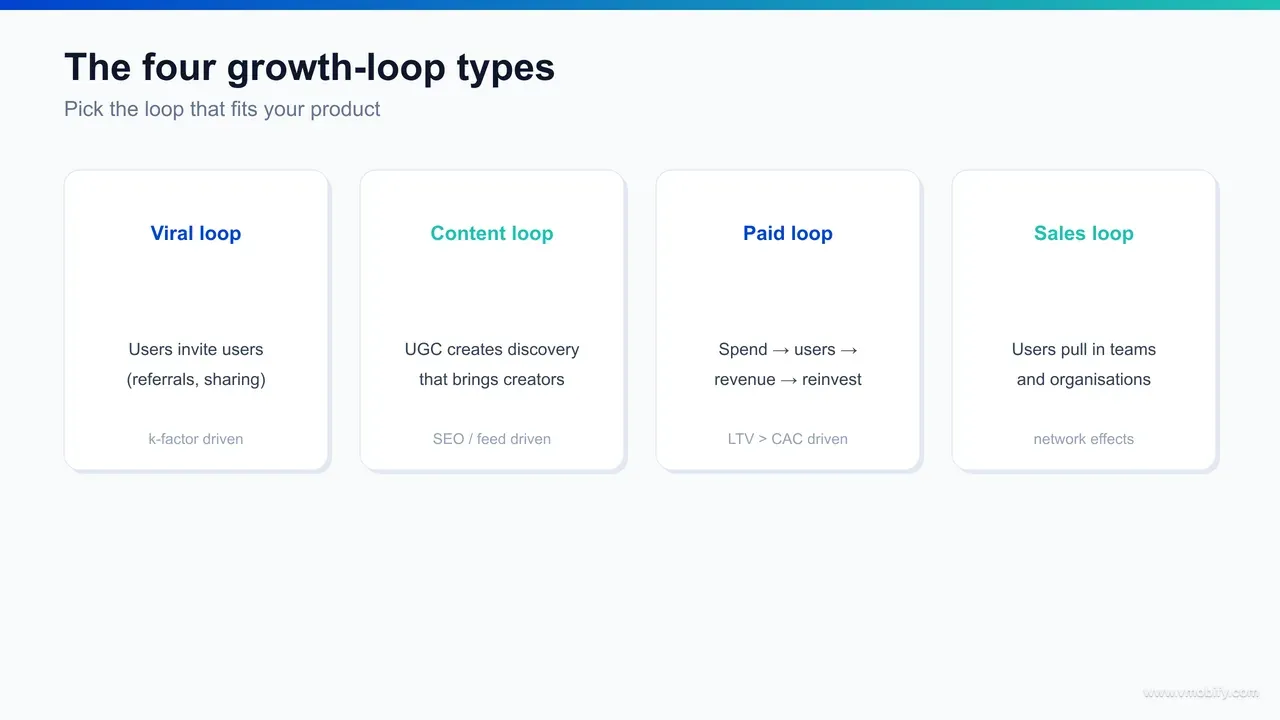
The paid loop reads: spend → new users → revenue (and data) → reinvested spend. The reinvestment step is what makes it a loop rather than a funnel. If a cohort of paid users pays back its acquisition cost quickly enough, you can recycle that revenue into buying the next cohort, and the cycle time of the loop becomes your payback period. The two levers are therefore unit economics (revenue per user versus cost per user) and payback speed (how fast a user returns the cash you can re-spend). An app with a 30-day payback can run a far tighter, faster-compounding paid loop than one with a 9-month payback, even at identical lifetime value — the same cycle-time logic that governs viral loops.
The data half of the paid loop is underrated. Every paid cohort teaches the ad networks who converts, which feeds back into targeting and lowers future acquisition costs — the loop improves itself. This is why strong activation matters even for purely paid growth: better activation raises revenue per user and shortens payback, which tightens the loop and lets you out-bid competitors in the same auction. Paid and product are not separate; the product's economics set the maximum speed of the paid loop.
A sales loop is the B2B and high-ACV analogue. Revenue funds a sales and marketing motion — reps, content, events — that generates pipeline, which closes into revenue that funds more of the same motion. It is slower and more human-intensive than a paid loop, but the structure is identical: output reinvested as input. For most consumer apps the sales loop is irrelevant, but for prosumer, fintech-B2B, and enterprise-distributed apps it is the dominant engine, and it pairs naturally with a product-led viral loop seeded inside accounts.
The honest limit of paid and sales loops is that they are capped by your margins, not by virality. They compound only as fast as your unit economics allow, and they stop the instant payback turns negative. That is precisely why the strongest companies stack a paid loop (for predictable, controllable volume) on top of a viral or content loop (for compounding that is not gated by margin). The paid loop buys the seed users; the viral or content loop multiplies them for free.
How do you choose the right growth loop for your app?
You choose a primary loop by matching the loop type to how your product naturally creates value and exposure — viral loops fit products people use with other people, content loops fit products that generate discoverable output, and paid or sales loops fit products with strong, fast-paying unit economics — and then you stack a second loop to cover the first one's weakness. Picking the wrong primary loop is the most expensive strategic error in early growth, because you spend a year optimising an engine that physically cannot compound for your product.
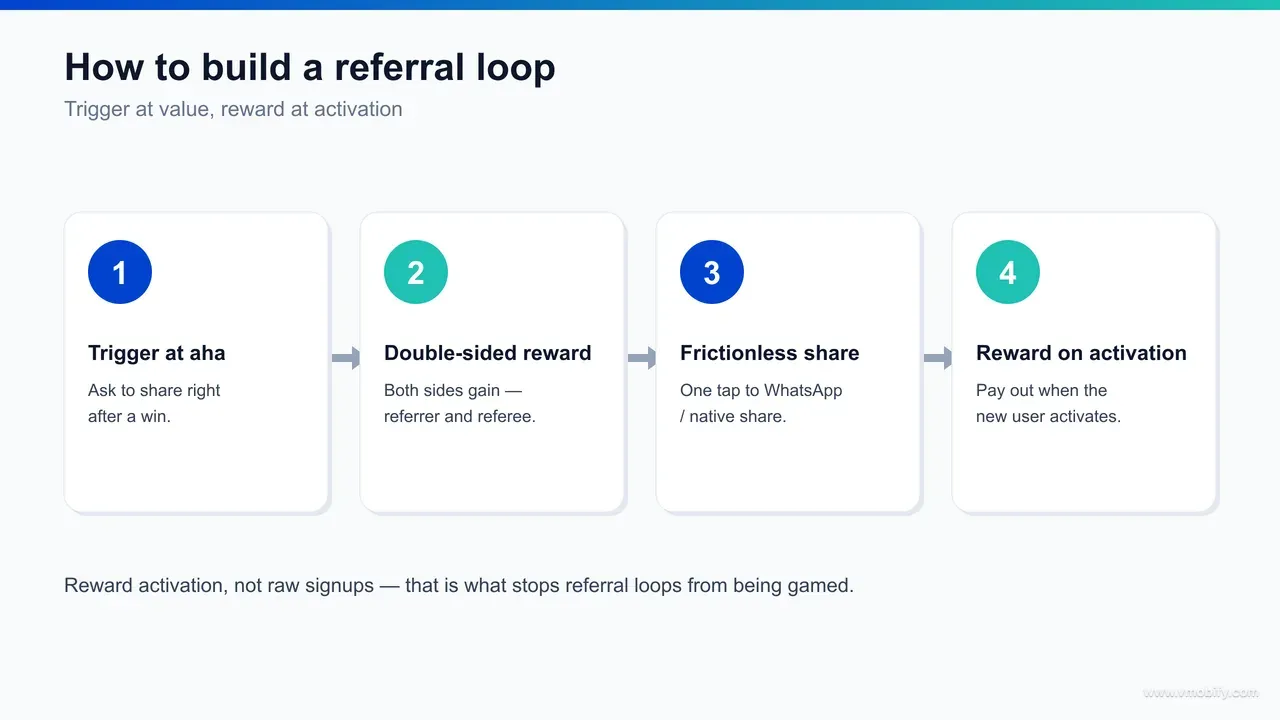
Use these fits as a starting diagnosis:
Viral loop
- Best when the core action involves other people: messaging, social, payments, collaboration, multiplayer gaming.
- If a user cannot get full value alone, virality is likely intrinsic and should be your primary loop.
- If the product is single-player, virality will only ever be a bolted-on referral programme — useful, but not your engine.
Content / UGC loop
- Best when usage creates discoverable artefacts: anything where users produce posts, videos, answers, listings, profiles, or reviews that search and feeds can surface.
- Slow to start, durable once running.
- Wrong choice if your product produces nothing a stranger would ever discover.
Paid loop
- Best when unit economics are strong and payback is fast: commerce, on-demand, subscription apps with high revenue per user.
- Controllable and predictable, but capped by margin and never free.
- Wrong choice as a sole engine if your monetisation is thin.
Sales loop
- Best for high-ACV, prosumer, or enterprise-distributed apps: where a human-assisted motion is justified by deal size.
- Rarely relevant to pure consumer apps.
The decisive question for each candidate loop is honest: does the mechanism actually exist in my product today, or am I wishing it into being? A viral loop requires that using the product genuinely exposes it to non-users. A content loop requires that the output is genuinely discoverable by strangers. If you have to contort the product to make the loop true, it is not your loop. In our portfolio, the apps that scaled most cheaply were the ones that identified the loop already latent in their product and amplified it, not the ones that tried to graft a fashionable loop onto a product that did not support it.
Stacking matters as much as picking. A viral loop fills the top fast but is volatile and saturates; a content loop compounds durably but slowly; a paid loop is controllable but capped. The most resilient growth systems run two or three together so that the weaknesses cancel — paid seeds the viral loop, the content loop lowers blended cost over time, and the viral loop covers the months the content loop is still warming up. Decide which loop is primary, instrument it properly, and add the second only once the first is genuinely working.
How are network effects different from virality?
Virality is an acquisition mechanism — how quickly existing users bring in new ones; network effects are a value mechanism — how much more valuable the product becomes to each user as the network grows. They are routinely confused, but one fills the top of the system and the other raises the floor of retention and defensibility. A product can be viral without network effects, have network effects without being viral, or, in the strongest cases, both.
The cleanest way to keep them apart: virality affects your growth rate, network effects affect your retention and your moat. A referral programme can make a single-player app spread quickly, but each new user adds nothing to the experience of the existing ones — that is virality without network effects, and it tends to be fragile because there is no increasing reason to stay. A telephone, a payment network, or a marketplace gets more useful to everyone with each additional participant — that is a network effect, and it raises retention and switching costs whether or not the product is also viral. a16z's widely cited a16z — 16 Ways to Measure Network Effects catalogues more than a dozen distinct types, but the unifying property is the same: value scales with the size or density of the network.
Why this distinction is load-bearing for growth strategy: network effects make your loops stronger over time instead of weaker. A viral loop alone saturates — eventually most of a user's contacts already have the app, and the k-factor decays. But when virality sits on top of a genuine network effect, the rising value of the network lifts retention and re-engagement, which keeps users active long enough to keep seeding the loop. The two reinforce each other: virality grows the network, the network effect makes the larger network more valuable, the higher value keeps users active, and active users keep the viral loop firing.
Network effects also explain why some loops are defensible and others are not. A competitor can copy a referral incentive overnight, so virality alone is rarely a moat. A competitor cannot copy the accumulated network — the other users, the liquidity, the content density — without rebuilding it from zero. That is why investors prize network effects over raw virality: virality is a growth tactic that can be matched; network effects are an accumulating asset that compounds into a defensible position.
For most app teams, the practical takeaway is to ask two separate questions and never conflate them. First, what is my acquisition loop, and how fast does it compound? That is a virality and loop-design question. Second, does my product get better as it gets bigger, and if so, how do I make that value visible to users so it shows up in retention? That is a network-effects question. The first wins you this quarter's installs; the second is what stops next year's competitor from taking them back.
How do you instrument and measure a growth loop?
You measure a loop by instrumenting every step of the cycle as a sequence of events, calculating the conversion between steps, multiplying them into a loop coefficient, and timing how long one full cycle takes — so you can see exactly which step is throttling the loop and whether each cycle is bigger or smaller than the last. A loop you cannot decompose into steps is a loop you cannot fix; you can only watch it work or fail.
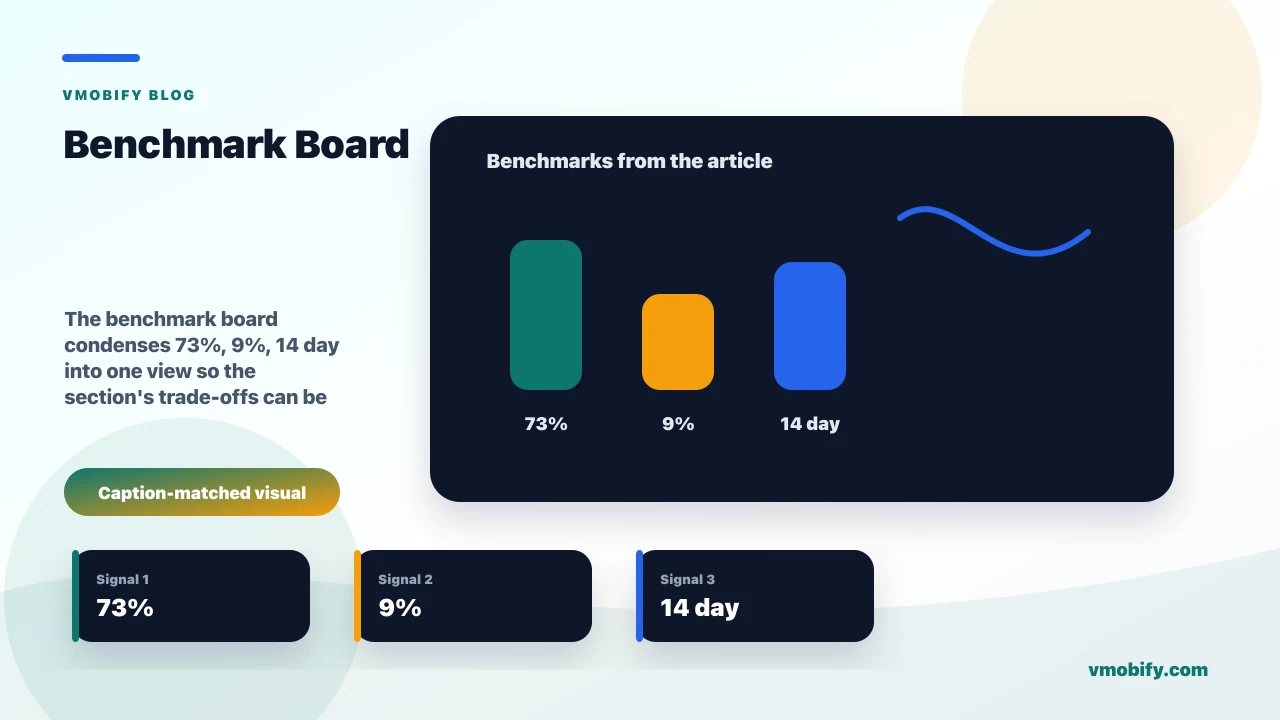
Start by writing the loop down as an explicit sequence. For a viral loop that might be: new user activates → reaches share moment → sends invite → invite delivered → invite opened → new user installs → new user activates. Each arrow is a conversion rate you must capture as a tracked event. The product of those conversion rates, multiplied by the average number of invites per user, is your loop coefficient. The value of writing it out this way is that it converts a vague "our referral programme is underperforming" into a precise "73% of users hit the share moment but only 9% send an invite" — and now you know the bottleneck is the share prompt, not the incentive.
The events and the product analytics that read them are the foundation. This is where a proper analytics setup earns its keep: you need clean step-by-step funnels for each loop, cohorted so you can see whether the users you acquired this month are generating more or fewer new users than last month's cohort. Amplitude and similar product-analytics tools are built around exactly this — event taxonomies, retention curves, and behavioural cohorts — and the discipline of defining your loop as a named set of events is what makes the loop observable at all.
Track these four things on every loop, and review them as a set:
- Loop coefficient: the multiplier for one full cycle (for viral loops, the k-factor). Above 1.0 the loop compounds on its own; below 1.0 it amplifies your other channels. Watch the trend, not just the level — a coefficient drifting down means saturation or decay.
- Cycle time: the median elapsed time for one complete pass. Halving cycle time can do more for compounded growth than raising the coefficient, and it is often easier — usually by compressing time-to-value so the loop can re-fire sooner.
- Step conversion rates: the conversion at every arrow in the sequence. This is your diagnostic surface; the lowest-converting step is where the next experiment goes.
- Loop quality: whether users the loop brings in retain and re-enter the loop themselves. A loop that imports churning users inflates the coefficient on a dashboard while quietly dying — always cohort the inputs by downstream retention.
Across our portfolio, the teams that grow loops fastest treat the loop as a measured system rather than a campaign: one named loop, one explicit event sequence, one coefficient and cycle time reviewed weekly, and one experiment running against the current bottleneck step at all times. That cadence — instrument, find the throttling step, fix it, re-measure — is the entire job.
How do growth loops work for India?
In India the highest-velocity growth loops route through WhatsApp sharing and vernacular user-generated content, because the same trust and language dynamics that make referrals spread also govern how the next 300 million internet users discover and adopt apps. A loop designed for a metro, English-first, feed-based Western audience will under-compound in India even if the underlying mechanic is sound — the channel and the language are the loop, not an afterthought.
WhatsApp is the dominant viral substrate. A referral or content share that arrives as a personal WhatsApp message from a known contact carries a trust signal no social feed can match, and India's dense family and community group chats turn a single share into a broadcast to dozens of high-trust recipients. This is why WhatsApp-routed referral installs convert at a multiple of social-feed sharing in India — a gap large enough that it should determine your entire share-mechanics design, as we detail in our referral programme guide. The cycle time is also fast: WhatsApp shares are read and acted on within minutes, which compounds harder than a slow feed-distribution loop.
Vernacular content loops are the India-specific version of the UGC engine, and they are still under-built. India's growth is overwhelmingly non-English: per Statista's India mobile-internet data, the next wave of users is Tier-2/3 and regional-language-first. Content created in Hindi, Tamil, Telugu, Marathi, Bangla and other languages becomes a discovery surface for audiences that English-first content simply never reaches. An app whose users create vernacular reviews, short videos, answers, or shareable summaries builds a content loop pointed directly at the fastest-growing, least-contested segment of the market — and our own retention work shows vernacular cohorts retain markedly better when the content that brought them in was in their own language.
Three design rules for India loops.
- Make WhatsApp the primary, pre-populated share path with a conversational, vernacular message — not a marketing line and not English-only.
- Treat each major language as its own content surface with its own creators, not a translation of English content.
- Account for low-end devices and intermittent connectivity in the loop's friction points: a share or content-creation step that assumes a fast connection and a flagship phone will silently drop a large share of the cycle in Tier-2/3 markets.
The pattern we see repeatedly in our India portfolio is that the same product compounds two to three times faster once its loops are re-routed through WhatsApp and re-built in vernacular, with no change to the core mechanic. The loop was never the problem — the loop was running through the wrong channel in the wrong language for the audience that was actually available to acquire.
How do you design a referral loop that is not gameable?
You design a non-gameable referral loop by rewarding a genuine downstream action rather than the install, making the reward two-sided, gating payout behind verification and a hold period, and instrumenting the social graph so fraud rings show up as structural anomalies — so that the cheapest way to earn a reward is to refer a real, engaged user. A referral programme is the most common deliberately engineered viral loop, and it fails for the same reason every time: it pays out for the wrong event.
The structural principles below are the loop-design layer; the full incentive maths, k-factor calibration, and India-specific WhatsApp mechanics live in our dedicated mobile app referral programme guide, so treat this as the architecture and that as the build manual.
- Reward a meaningful action, never the install: pay out only after the referred user completes a first genuine in-app action — a first transaction, a first completed session, a first-week retention event. This single rule destroys the economics of fake installs, because a fraudster now has to make each fake account behave like a real user, which usually costs more than the reward is worth.
- Make it two-sided: reward both the referrer and the new user. Two-sided rewards consistently out-convert one-sided ones because the share reads as a gift rather than a transaction, which lowers the social friction that throttles the loop's invite-conversion step.
- Fire the prompt at the satisfaction peak: surface the referral ask immediately after a positive milestone — first success, post-purchase confirmation — not mid-onboarding or in a buried settings menu. The prompt's timing sets the invite rate, which is half of your k-factor.
- Gate payout with verification and a hold: require phone or OTP verification and add a 7–14 day hold between the qualifying action and the credit, so your fraud system can observe behaviour and cancel bad payouts before they clear.
- Instrument the referral graph: genuine referrals form natural social clusters; fraud forms star and ring patterns. Monitoring the graph turns fraud detection into an automatic structural check rather than manual policing.
The deeper design point is that an ungameable loop is one where the reward is structurally tied to value creation. If the reward fires on install, you are paying for a number that looks like growth; if it fires on a retained, paying user, you are paying for growth itself — and fraud becomes unprofitable as a side effect, not as a result of constant manual enforcement. In our portfolio, every referral loop that had to be shut down for fraud had made the same original mistake of rewarding the install; every durable one rewarded a downstream action from day one.
Which pitfalls cause growth loops to break?
Growth loops break for a small, repeatable set of reasons: confusing a funnel for a loop, ignoring cycle time, letting the loop import low-quality users, expecting content-loop results on paid-loop timelines, neglecting the activation step inside the loop, and failing to instrument the cycle so the broken step stays invisible. Almost every "our growth stalled" diagnosis traces back to one of these.
- Calling a funnel a loop: the most common error. If you cannot name the specific mechanism by which this user acquires the next one, you do not have a loop — you have a media buy with optimistic framing. Naming the reinvestment step honestly is the first fix.
- Ignoring cycle time: teams pour effort into raising the coefficient while leaving a multi-week cycle untouched. A faster cycle with a lower coefficient often compounds more — compressing time-to-value so the loop re-fires sooner is usually the higher-leverage lever and the one most often skipped.
- Optimising for loop volume over loop quality: a loop that imports churning users inflates the coefficient on a dashboard while quietly dying, because those users never re-enter the loop. Always cohort the loop's inputs by downstream retention; a loop is only as healthy as the users it brings back in.
- Judging a content loop on a paid clock: content loops show little for two to three quarters, then bend the curve. Killing one at month four because it underperforms a paid CPI benchmark forfeits the only loop that would have made the economics defensible. Match the measurement window to the loop type.
- Treating activation as separate from the loop: in most viral and content loops the user must reach value before the loop can fire again, so a weak activation experience is a broken loop, not a separate problem. Fixing activation often does more for the coefficient than any incentive change.
- Running uninstrumented: a loop you have not decomposed into measured steps can only be admired or mourned, never fixed. Without per-step conversion and cycle-time tracking, the throttling step stays invisible and every "experiment" is a guess.
The meta-pitfall behind all of these is impatience paired with imprecision: teams want the compounding of a loop on the predictable timeline of a funnel, and they measure the loop too coarsely to see what is actually wrong. The fix is the discipline laid out through this guide — pick the loop your product genuinely supports, instrument every step, optimise cycle time as hard as coefficient, protect loop quality, and give each loop the time horizon its type demands. If you want help designing, instrumenting, or rescuing a stalled loop on top of your existing acquisition, that is exactly the work our team does — talk to us and we will map your product's latent loops before you spend another rupee chasing installs through a leaking funnel.
Frequently Asked Questions
What is the difference between a growth loop and a funnel?+
A funnel is a one-way sequence — awareness to install to retention — that leaks at every stage and stops producing the moment you stop spending at the top. A growth loop is a closed cycle where the output of one pass (a new user, a piece of content, a rupee of revenue) becomes the input that drives the next pass, so it compounds at constant input instead of growing linearly with spend.
What is the k-factor (viral coefficient)?+
The k-factor measures how many new users each existing user brings in: k = invites sent per user × the conversion rate of those invites. At k = 1.0 a loop is self-sustaining, above 1.0 it grows exponentially without extra spend, and below 1.0 it still lowers your blended acquisition cost by funding free installs alongside paid ones.
Why does cycle time matter as much as k-factor?+
Cycle time is how long one full pass of the loop takes — from a user joining to that user bringing in the next user. A lower k-factor with a fast cycle can out-compound a higher k-factor with a slow cycle, because the faster loop completes more cycles in the same calendar window. Compressing time-to-value to shorten cycle time is often the highest-leverage growth lever.
Are network effects the same as virality?+
No. Virality is an acquisition mechanism — how fast existing users bring in new ones. Network effects are a value mechanism — how much more useful the product becomes as the network grows. Virality fills the top of the system; network effects raise retention and build a moat. The strongest products have both, and the two reinforce each other.
How long does a content or UGC loop take to work?+
Content loops typically show little for the first two to three quarters and then bend the cost curve sharply as the accumulated, discoverable content surface crosses a threshold. They are the slowest loop to start but the most durable once running, because every user-created artefact keeps acquiring users for years. Judging them on a paid-channel timeline is the most common reason teams kill them prematurely.
Which growth loop is best for an India-first app?+
For most India-first consumer apps the fastest-compounding loops route through WhatsApp sharing and vernacular user-generated content. WhatsApp referral shares convert far better than social feeds because of personal trust and dense group chats, and vernacular content surfaces reach the Tier-2/3, regional-language audience that drives India growth. Re-routing an existing loop through WhatsApp and regional languages often compounds two to three times faster with no change to the core mechanic.
What is the biggest mistake teams make with growth loops?+
Calling a funnel a loop. If you cannot name the specific mechanism by which one user acquires the next, you have a media buy, not a loop. The fix is to write the loop down as an explicit, measured sequence of steps, identify the step throttling the cycle, and optimise cycle time as aggressively as the coefficient — then give each loop the time horizon its type demands.
Sources
- Reforge — Growth Loops Are the New Funnels — Brian Balfour / Reforge framing of loops vs funnels and loop taxonomy
- Lenny's Newsletter — growth strategy and loops — Widely-read synthesis of growth-loop thinking for product teams
- Andrew Chen — The Law of Shitty Clickthroughs — Why viral channels decay and cycle time / re-seeding matter
- a16z — 16 Ways to Measure Network Effects — Taxonomy of network effects and why they differ from virality
- Amplitude — growth and product analytics blog — Instrumenting loops, event taxonomies, retention cohorts and measurement
- AppsFlyer — State of App Marketing in India — Acquisition, referral and retention benchmarks for mobile loops
- Statista — Mobile internet usage in India — Tier-2/3 and vernacular growth context for India loops
About the author
Amol Pomane — Founder, Vmobify
Amol leads Vmobify, a mobile app growth agency that has driven 30M+ downloads and ranked 54K+ keywords across 300+ apps since 2013. He writes about ASO, paid user acquisition, retention, and the operational reality of scaling mobile apps in India and global markets.